Start with the clothes you actually wear
An accessory earns its place when it works with ordinary days, not only with an imagined occasion. Before choosing a scarf, take stock of the coat you wear most, the jacket that comes out on busy mornings, and the dresses or shirts you return to without thinking. Their necklines, textures and colours offer better guidance than a passing trend. A deep-toned scarf might bring definition to a pale coat; a lighter wrap might give a dark outfit breathing room. The aim is a piece you can picture wearing before it arrives.
Think about frequency as well as appearance. If your week moves between public transport, an office, a café and an evening out, a scarf that can be folded, loosened and retied may be more useful than one chosen for a single photograph. If most of your clothes are patterned, a quieter accessory can give them space. If your wardrobe is largely plain, a square scarf or a stronger colour can add interest without requiring a new outfit. Begin with your routines, then let style follow.
Understand the story behind the name
UniqueYou dates its beginnings to 2014, when the project started with scarves and clothing. Its history includes a pause and a return after the domain was recovered; it should not be read as a claim of uninterrupted trading. That distinction matters because a brand’s history is more useful when described plainly than when polished into a seamless legend. Today the name is associated here with an accessible approach to elegant accessories, especially pieces chosen to sit comfortably beside a woman’s existing clothes.
The visual identity provides a small clue to that approach. An original brown wordmark carried a horse motif and the words “Since 2014,” while a neutral taupe palette offers a restrained setting for different colours and fabrics. Neither a logo nor a palette can tell you how a particular scarf will feel in your hands. They can, however, frame a way of looking: pay attention to the accessory itself, the clothing around it, and the version of your style you would like to bring forward.
Let shape determine how you wear it
A long scarf, a broad shawl, a wrap and a square scarf may all sit near one another in a collection, but they solve different styling questions. A long scarf can make a vertical line over a coat or be looped closer to the neck. A shawl or wrap can cover shoulders over a dress or provide another layer when you are moving between temperatures. A square scarf gives you more options at a smaller scale: folded into a triangle, tied at the neck, or used to draw attention to a collar.
Look at the proportions of the clothes you plan to pair with it. A voluminous coat may already make a strong silhouette, so a neatly folded scarf can keep the neckline clear. A simple dress may welcome the wider sweep of a shawl. For a gift, shape can be a safer starting point than an exact shade: notice whether the recipient usually wears long scarves hanging loose, wraps draped across the shoulders, or small squares tied close. Their habits are evidence of what feels natural to them.
Read material names carefully
Silk, cashmere and wool describe different categories of interest, not a promise that every item in a category has the same composition. Check the individual product information before deciding what to buy. A person who wants a scarf for a particular season, sensitivity or care routine needs details about that specific piece, including its stated fibres and care instructions. A collection name can help you find candidates; it should not replace the label or description when the material itself is central to your choice.
Consider how you want the accessory to behave rather than treating one fibre as automatically best. You might want something that folds into a small bag, something with more presence over a coat, or a wrap that sits visibly across your shoulders. Texture, weight and dimensions all affect the result, and photographs can only take you so far. When comparing options, read the measurements and composition alongside the colour and styling images. That slower reading often prevents a lovely-looking item from becoming the wrong item for your everyday life.
Use colour as a conversation with your wardrobe
Colour becomes easier to choose when you ask what it will meet. Lay a favourite coat or jacket next to two or three possible scarf colours, whether in person or in your mind. Do you want continuity, contrast or a small accent? Brown and taupe can sit quietly among other neutrals; black may echo a frequently worn shoe or bag; red or burgundy can provide a deliberate point of focus. White or another pale shade can change the balance of a dark outfit. These are possibilities, not rules: the right contrast is one you enjoy seeing repeatedly.
Also notice which colours appear near your face in the clothes you already like. A scarf occupies that same visible space, so an appealing shade in isolation may feel different when worn. Pattern needs the same thought. Checks can bridge two colours already present in an outfit, while a single-colour scarf can steady a patterned coat. If you are uncertain, begin with a familiar colour family and vary the tone or texture. A modest change may be more wearable than an ambitious departure you never quite feel ready to tie.
Dress for the occasion without dressing as someone else
An invitation to a wedding, a dinner after work or a trip to a new city can make an accessory feel especially important. The temptation is to choose the most conspicuous option. Instead, ask what the rest of the outfit is doing. A simple dress may allow a stole or shawl to become the main detail. If the dress already has embroidery, pleats or a vivid print, a restrained wrap may be the better companion. Think about how you will carry it, where it will rest while seated, and whether you will want it outdoors as well as inside.
The same principle applies to less formal days. A scarf tied close under a jacket makes a different impression from one left long over a coat; neither needs to be reserved for a special event. Try describing the outfit in a sentence: relaxed but composed, warm but not bulky, or formal without stiffness. That sentence can be a useful filter when you browse. It keeps the accessory connected to the life you are dressing for, rather than asking you to perform a new personality for an afternoon.
Choose a gift by observing, not guessing
A scarf can be a thoughtful gift because it enters someone’s daily routine, but that also makes personal preference important. Observe the recipient’s existing accessories before deciding. Are they drawn to crisp solids or lively patterns? Do they favour small neck scarves, substantial winter layers or wraps for occasions? Which coat do they wear most often? A gift that acknowledges those habits can feel attentive without claiming to know a person better than they know themselves. If you are unsure, select for versatility rather than surprise alone.
Practical details deserve the same care as colour. Check the item’s dimensions, stated material composition and care guidance against the recipient’s likely use. Someone who travels lightly may appreciate a different shape from someone who wants generous shoulder coverage. If you are choosing for a particular outfit, try to establish its real colour and neckline instead of relying on a vague memory. A brief, honest note about why you chose the scarf can make the gesture personal; the accessory does not have to carry every meaning by itself.
Make room for place, weather and memory
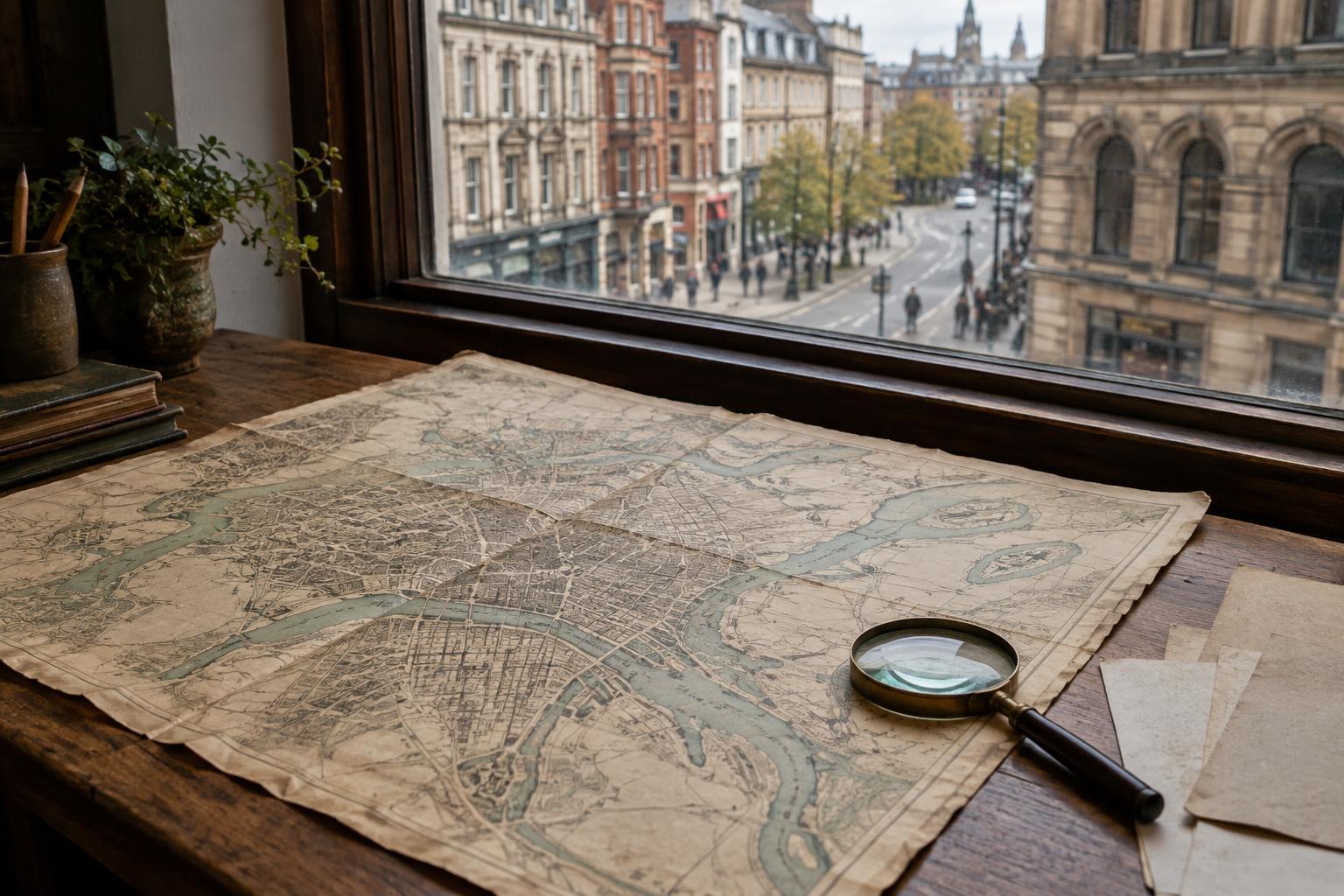
City life gives scarves many roles. One morning they are a layer against the cold between home and a station; another evening they are a way to make an outfit feel finished before a reading, a meal or a visit with friends. The same scarf can gather associations without being designed to announce them. A colour might recall a street at dusk, a fabric might become linked to a journey, or a familiar knot might help you feel settled in an unfamiliar room. Those meanings grow through use rather than through a product description.
At City and Story Review, we pay attention to the relationship between material things and the stories people carry through streets. That does not make a scarf a substitute for poetry, fiction or the complex history of a place. It does offer a grounded way to think about personal style: objects become expressive when they participate in lived experience. Choose an accessory you can move in, care for and reach for again. Its meaning can remain open, changing as your days and your wardrobe change.
Browse with a clear question in mind
A collection page is most helpful when you arrive with a question. Are you seeking a winter layer to work with a dark coat, a light scarf for changing weather, or a wrap for a dress? Do you want to compare wool and cashmere categories, or would a cotton or silk scarf suit the way you plan to wear it? Use the collection title to narrow the field, then check each item on its own terms. A colour category tells you where to look; it does not establish identical fabric, size or feel across everything shown.
UniqueYou has 20 regional domains, 21 regional-language versions and 16 distinct languages. Those figures differ because countries can share a language, and the United Arab Emirates has two versions on one domain: Arabic at the root and English at /en. The guide below identifies each destination by country and language so you can choose a place to start. Regional pages and collection labels are navigation aids, not evidence that a particular item is available or suitable. Keep your wardrobe, your purpose and the individual product details at the centre of the decision.
A regional guide to browsing
Choose the country and destination language that suit you, then use the indicated starting point or collection to explore. A link to a colour, fabric or garment category is an invitation to compare individual items, not a claim that every item shares one composition. Where a short phrase appears in another language, it is the destination’s own navigation wording; the English explanation tells you where it leads.
Poland — Polish
For a Polish-language starting point, use https://uniqueyou.pl/. The Polish-language black-scarf collection is available through UniqueYou; it may help if you are matching a dark coat. For winter-scarf options, the Polish-language invitation to explore the collection is Poznaj ofertę.
Germany — German
The German-language starting point is https://uniqueyou-store.de/. If brown is already part of your wardrobe, the German-language brown-scarf collection is reached through UniqueYou. To consider a layer for colder days, the German-language invitation leading to winter scarves is Mehr erfahren.
Czechia — Czech
Begin with the Czech-language destination at UniqueYou. If a cotton neck scarf is the shape and material you want to investigate, the Czech-language invitation leading to that collection is Zjistěte více; check the details of any individual piece.
Spain — Spanish
The Spanish-language starting point is UniqueYou. For a broader shoulder layer to consider with a dress or simple top, the Spanish-language invitation leading to shawls is Ver más. Compare dimensions before deciding how you would wear one.
France — French
The French-language starting point is UniqueYou. For an accessory that may feel less visually weighty beside your usual clothes, the French-language invitation leading to light scarves is En savoir plus. Read each item’s material and measurements separately.
Hungary — Hungarian
Start at the Hungarian-language destination UniqueYou. If you are comparing cashmere scarves with other material categories, the Hungarian-language invitation leading to that collection is Tudj meg többet. The individual description remains the place to check composition.
Italy — Italian
The Italian-language starting point is https://uniqueyou.it/. For a wrap to consider alongside a dress or wedding outfit, the Italian-language collection is reached through UniqueYou. If burgundy suits clothes you already own, the Italian-language invitation leading to scarves in that colour is Scopri di più.
Romania — Romanian
The Romanian-language starting point is https://uniqueyou.ro/. For a stronger colour accent, the Romanian-language red-scarf collection is reached through UniqueYou. For cotton square-scarf possibilities, the Romanian-language invitation leading to that collection is Află mai multe.
Slovakia — Slovak
Begin at the Slovak-language destination https://uniqueyou.sk/. A Slovak-language scarf collection is reached through UniqueYou if you want to compare shapes. For cotton neck scarves specifically, the Slovak-language invitation leading to that collection is Zistite viac.
Finland — Finnish
The Finnish-language starting point is https://uniqueyou.fi/. For shoulder wraps to consider with dresses or wedding clothes, the Finnish-language collection is reached through UniqueYou. For a pale accent against darker clothing, the Finnish-language invitation leading to white scarves is Lue lisää.
Sweden — Swedish
Start at the Swedish-language destination UniqueYou. If a red accent would work with a coat or jacket you already wear, the Swedish-language invitation leading to red scarves is Läs mer. Consider the particular shade as well as the size.
Denmark — Danish
The Danish-language starting point is UniqueYou. For an overview of scarves before narrowing your choice by colour, shape or material, the Danish-language invitation leading to that collection is Læs mere. Begin with the outfit you hope to pair with one.
Belgium — Dutch
The Dutch-language Belgian starting point is https://uniqueyou.be/. To consider burgundy as an accent, use the Dutch-language collection reached through UniqueYou. For smaller silk-scarf possibilities, the Dutch-language invitation leading to that collection is Ontdek meer; check each item’s stated composition.
Austria — German
The German-language Austrian starting point is https://uniqueyou.at/. For merino-wool scarf options, the German-language collection is reached through UniqueYou. To compare the wider wool-scarf category, the German-language invitation leading there is Mehr erfahren. Review individual details rather than assuming the categories are identical.
Netherlands — Dutch
Begin at the Dutch-language Netherlands destination UniqueYou. If you want to see whether a stole would sit well over a dress or another simple outfit, the Dutch-language invitation leading to stoles is Ontdek meer. Size and drape are useful points to compare.
United States — English
The English-language United States starting point is UniqueYou. If a shawl is the shape you want and cashmere is a material category you are considering, the English-language invitation leading to cashmere shawls is Discover more. Check the composition of the piece that interests you.
United Arab Emirates — Arabic
The Arabic-language United Arab Emirates version begins at the domain root, https://uniqueyou.ae/. If a checked pattern could bring together colours in your wardrobe, the Arabic-language invitation leading to checked scarves is اكتشفي المجموعة. This is the Arabic version, distinct from the English destination below.
United Arab Emirates — English
The English-language United Arab Emirates version is at /en and is reached through UniqueYou. It shares a regional domain with the Arabic-root version, while offering a separate English-language starting point for browsing the accessories.
Ireland — English
Start at the English-language Ireland destination UniqueYou. If you are deciding whether a shawl would complement a dress, coat or evening outfit, the English-language invitation leading to shawls is Discover more. Compare shapes and measurements against how you plan to wear one.
United Kingdom — English
The English-language United Kingdom starting point is https://uniqueyou.uk/. To consider wool scarves with your usual outerwear, use the English-language collection reached through UniqueYou. For a comparison with cashmere scarves, the English-language invitation leading to that collection is Discover more.
Portugal — Portuguese
Begin at the Portuguese-language destination UniqueYou. If you are choosing an accessory for a dress or wedding outfit, the Portuguese-language invitation leading to that collection is Saiba mais. Let the outfit’s neckline and your preferred amount of shoulder coverage guide the choice.
A good scarf does not need to reinvent your style. Choose one that makes sense with the clothes, places and occasions already in your life, and give its story time to develop.