Why a draft sounds different from how it looks
On the page, a writer can move past an awkward sentence because they already know what it means. Reading aloud makes that shortcut harder. The voice has to travel through each word in order, while the listener has to hold each idea long enough to understand the next. A missing connection, a crowded sentence or an unexpected shift in point of view may become easier to notice.
Sound is not a test of whether prose is good. A deliberately tangled thought, a clipped fragment or a long, breathless sentence may be doing exactly the work a piece needs. The value of reading aloud is that it gives you another encounter with the draft. Instead of asking, “Did I write what I intended?” you can ask, “What does a reader experience while moving through these words?”
Listen for friction, not just mistakes
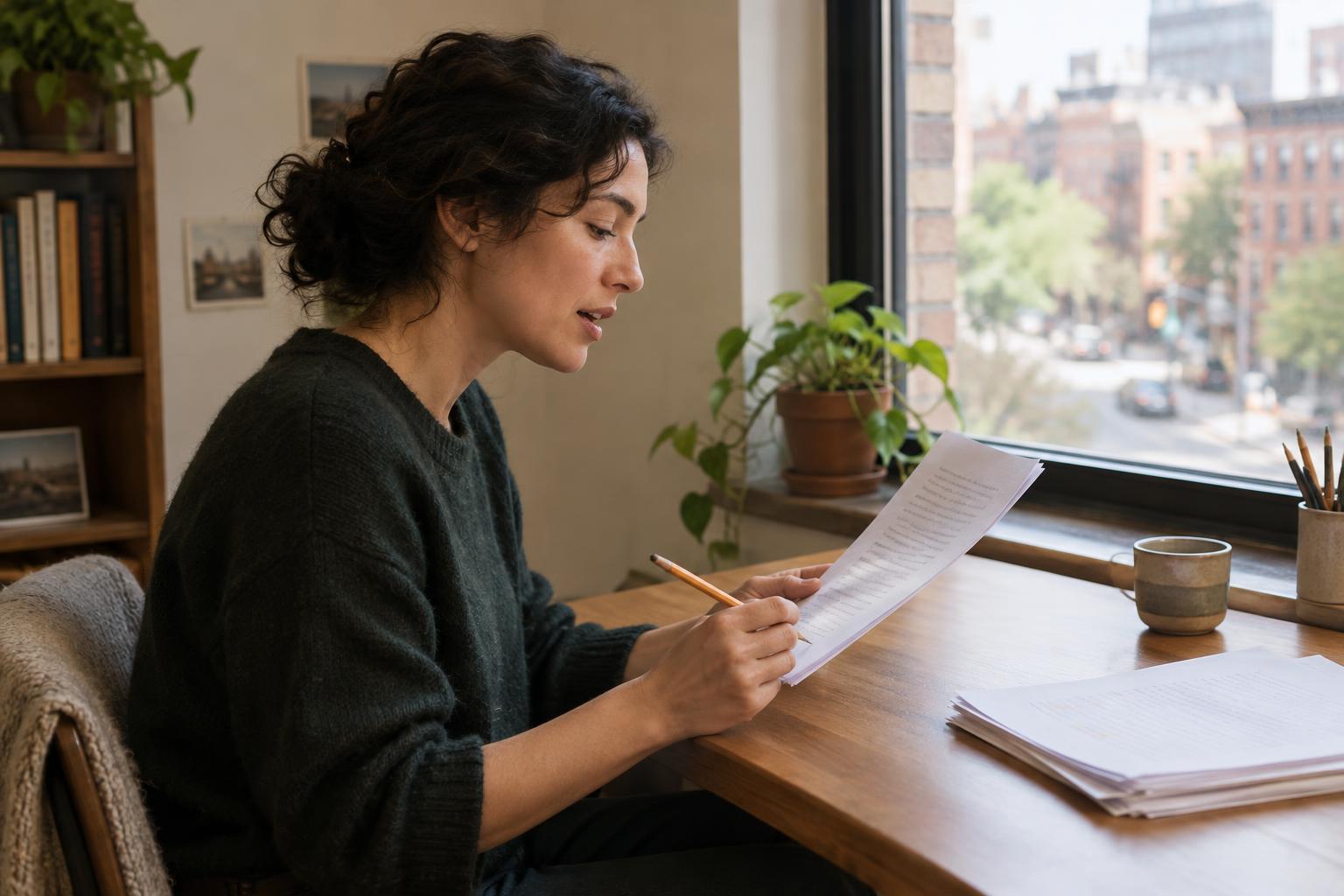
Start with a short passage rather than an entire manuscript. Read at a comfortable pace and mark any place where you stumble, run out of breath, lose track of a reference or want to change a word without thinking about it. Do not stop to repair every line. A quick mark in the margin lets you keep listening to the passage as a whole.
Afterward, look for patterns. Several long sentences in a row may make a paragraph feel dense, even if each sentence is clear on its own. Repeated sentence openings can flatten a lively scene. A pronoun that looked obvious on the page may briefly point to two different people when heard. These are invitations to investigate, not automatic instructions to shorten, vary or replace everything you marked.
Pay attention to the places where your voice naturally slows. Sometimes a pause suggests that punctuation could help the reader. Sometimes the sentence needs a clearer relationship between its ideas. And sometimes the pause is valuable: it gives an image or a difficult thought room to land. Revision means deciding which of those possibilities serves the passage.
Use rhythm to examine scenes and dialogue
A scene has a pace beyond the length of its sentences. Reading it aloud can show whether action, observation and reflection arrive in a satisfying order. If you find yourself hurrying through an explanatory paragraph to get back to the encounter at its center, ask whether that information belongs there. If an emotional turn seems to happen too quickly, the scene may need a gesture, a response or a moment of attention before it moves on.
Dialogue benefits from the same test, but natural-sounding speech is not simply a transcript of everyday talk. Fictional conversations often leave out repetition and small talk so that each exchange can carry tension or reveal a choice. Read each character’s lines in sequence as well as within the full scene. Notice whether their words reflect distinct habits of attention, and whether a line sounds as though it was written only to deliver information to the reader.
For prose shaped by a particular place or community, resist the urge to smooth every unfamiliar rhythm into a single neutral voice. Ask instead whether the context gives readers enough to follow and whether the language fits the speaker or narrator you have created. Clarity matters, but it need not erase texture.
Try more than one kind of listening
Reading your own work aloud is useful, but familiarity can still hide problems. On a second pass, you might ask a willing reader to read a brief section while you follow silently. Listen for unplanned pauses or moments where they need to start a sentence again. Avoid treating their performance as a verdict: a reader may stumble for reasons unrelated to the draft. Ask what felt clear or uncertain to them rather than asking whether they read it “correctly.”
If speaking aloud is difficult or impractical, listening to a text-to-speech rendering can provide another way to hear the order of words. Its flatness may expose repetition or ambiguity, though it cannot judge the intended music of a voice. You can also read silently while deliberately attending to cadence. The aim is not to follow one required method; it is to create enough distance from the draft to notice what a familiar page lets you skip.
Turn what you hear into a revision plan
When you finish, sort your marks before changing lines. Group them into questions such as clarity, rhythm, character voice and scene movement. Fixing a confusing reference is different from deciding that a slow paragraph should remain slow. Work first on problems that affect meaning or structure; polishing a sentence may be wasted effort if the passage later moves or disappears.
Then read the revised passage again, including a little text before and after it. A sentence can sound elegant in isolation and still interrupt the paragraph around it. The goal is not prose that never makes a reader pause. It is prose whose pauses, turns and changes of pace feel purposeful. Your ear can point to the places worth reconsidering; the final choice belongs to the story you are trying to tell.