Start with a place, not a complete story
A street corner can hold several histories at once: a familiar meeting place, a difficult walk to school, the former site of a shop, or simply a shortcut home. Oral history makes room for these lived meanings alongside maps, photographs and official records. Its strength is not that one person can explain an entire neighborhood. It is that a person can describe what it felt like to move through a particular place at a particular time.
Before arranging interviews, decide what you hope to learn without deciding what the answers should be. A question such as “How did people use the public square?” leaves more room than “When did the square stop feeling safe?” Think, too, about the boundaries you are drawing. Residents, shopkeepers, workers, visitors and people who have moved away may each know a different version of the same few blocks.
Ask for scenes and routines
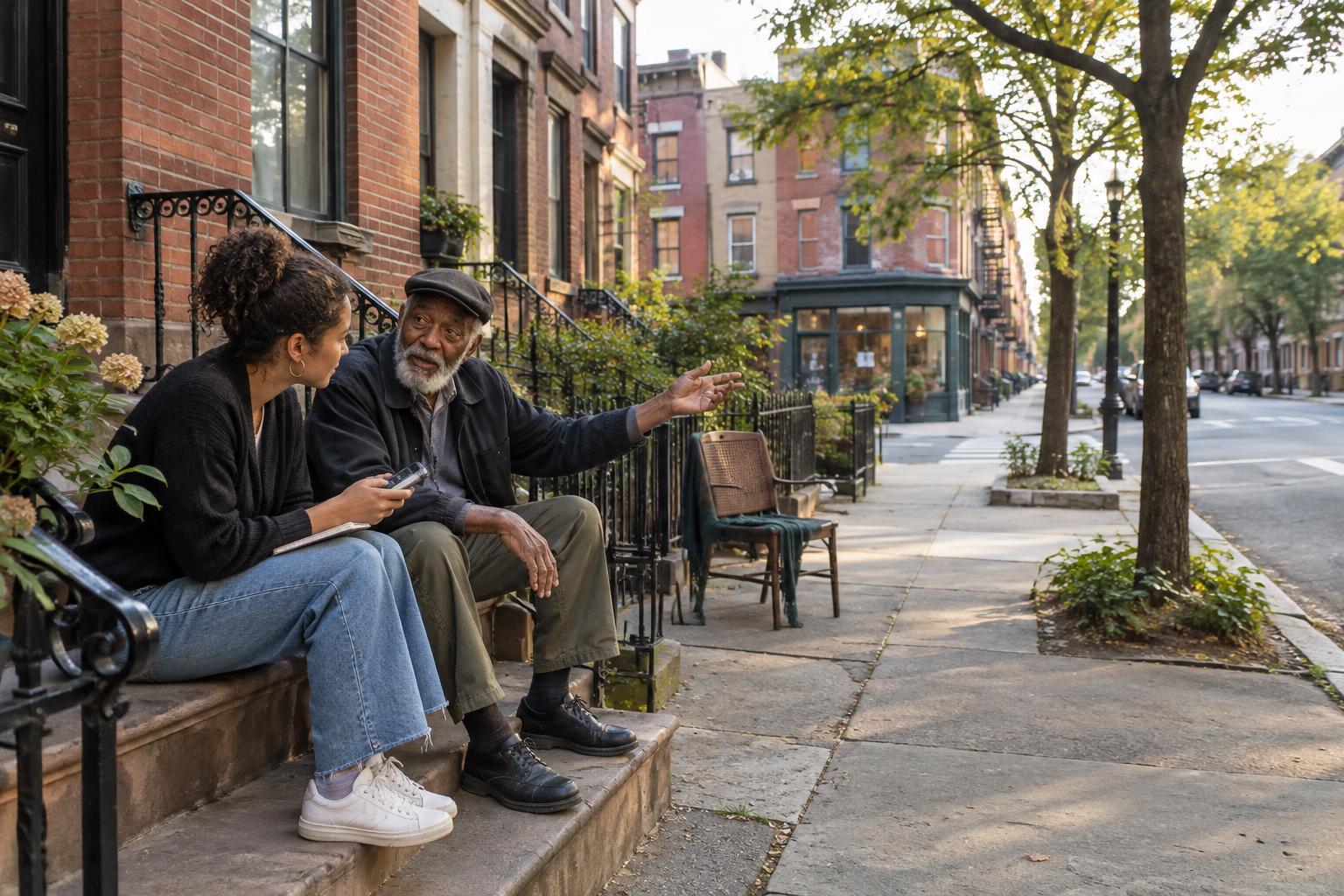
Begin with questions that help someone settle into a memory: “What was your first connection to this neighborhood?” “Can you describe a usual journey through it?” “Where did you go when you wanted company, privacy or help?” Follow the answer rather than rushing down a list. A passing mention of a bus stop, staircase or storefront may lead to a richer account than a broad question about how the area has changed.
Sensory and practical details can bring daily life into focus. Ask what could be heard from a window, which places were busy at different hours, or how neighbors learned one another’s names. If someone recalls a change, invite them to describe what they noticed first and how it affected their routine. Keep questions open enough for affection, frustration and ambivalence to coexist; people rarely experience a place in only one way.
Give the narrator room to set limits
Explain the project before asking someone to participate. Say whether you hope to record the conversation, take notes, publish excerpts or keep the material for a later project. Ask what name they want used and whether there are subjects they would rather avoid. Permission to speak is not necessarily permission to publish every detail, especially when a story also identifies neighbors, relatives or former coworkers.
During the interview, leave space for pauses and corrections. A narrator might remember an event differently midway through telling it, or decide that a detail is too personal to share. Neither response needs to be treated as an obstacle. If you plan to quote or summarize someone publicly, checking the relevant passage with them can help catch misunderstandings. Careful handling may not resolve every concern, but it gives the person a clearer say in how their words travel beyond the conversation.
Notice what the collection cannot tell you
Memory is selective. Two people may place the same shop on different corners or disagree about when a building changed hands. Rather than forcing their accounts into a single tidy timeline, distinguish what each person remembers from what you can establish another way. An unresolved difference may itself reveal how people oriented themselves within the neighborhood.
The interview list has limits, too. Who had time to speak? Who could be reached in the language you used? Who might distrust a request to record their experiences? Newer residents, tenants, young people, people who work nights and those who have left may be difficult to include. Naming such absences is more honest than presenting a handful of vivid voices as the neighborhood’s shared view. It also helps readers understand that an oral-history collection is shaped by access as well as memory.
Build an account that stays open
When turning interviews into an article or archive, keep enough context for each voice to remain distinct. Note the speaker’s relationship to the place in terms they are comfortable sharing, and make clear when a detail comes from recollection rather than a document. Avoid using one account merely to illustrate a conclusion formed in advance. Contradictions, unfinished stories and changing feelings can be part of the account.
A useful final question is: “What have I not asked that matters to you about this place?” It gives the narrator a chance to move beyond your map of the neighborhood. No set of interviews will recover everything that happened there. A thoughtful collection offers something more modest and durable: a way to hear how people made a place meaningful, while leaving visible the space for other memories to enter.