Revise for attention, not polish alone
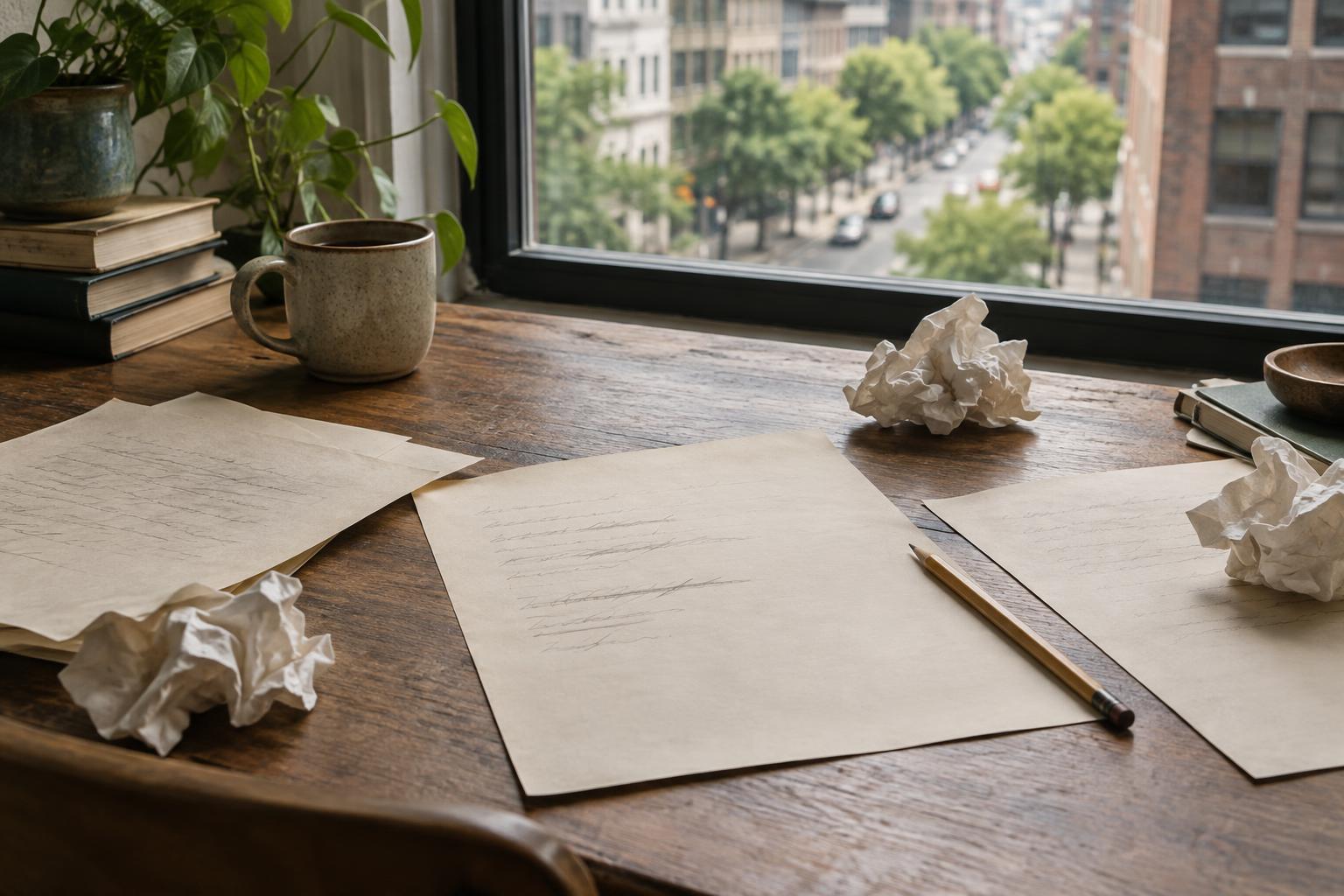
A first draft often records the moment a poem became possible. Revision asks a different question: what does a reader need in order to experience that moment? A line may have been essential to getting the draft written yet no longer be essential to the finished poem. That distinction makes cutting less like a judgment on the writing and more like a way of directing attention.
The most common revision problems are not always obvious errors. A familiar phrase may sit comfortably beside a vivid image. An explanatory line may sound clear while repeating what the image already conveys. A strong final sentence may close the argument but close down the poem’s possibilities. Before changing individual words, read the draft aloud and notice where your attention sharpens or drifts. Those shifts can tell you more than a hunt for phrases to delete.
Replace clichés with particulars
A cliché is not simply a common subject. Love, grief, rain, streets and home can all sustain original poems. The trouble begins when ready-made language does the observing for you. Phrases such as “a heavy heart” or “time stood still” name a feeling without showing how it appeared in this poem’s particular world. During revision, circle expressions that you could imagine in many unrelated poems. Ask what you actually saw, heard, touched or did at that point in the draft.
The answer need not be a more elaborate metaphor. If a speaker waits outside an apartment after an argument, the sound of a key turning unsuccessfully may carry more tension than a grand statement about heartbreak. Specificity can also come from a precise action, an unexpected comparison or an unusual relationship between ordinary words. The aim is not to decorate every line; it is to let the poem’s own circumstances shape its language.
Occasionally, a familiar phrase is useful because the poem questions it or places it under pressure. Keep it if the surrounding lines make the reader hear it differently. Otherwise, try drafting several plain alternatives before reaching for a striking one. A simple, accurate line often leaves more room for the poem than a conspicuously clever replacement.
Cut filler without cutting the poem’s breathing room
Filler is language that occupies space without adding movement, texture or productive pause. It can take the form of an opening that announces the subject, a line that restates an image, or a transition that tells the reader what the next stanza already shows. Phrases such as “I remember when” and “I began to realize” may be necessary in some poems, but they are worth testing: what happens if the poem starts with the remembered scene or the realization itself?
Try removing a suspect line and reading the lines on either side together. If the connection becomes more alive and remains understandable, the cut may help. If the poem loses an important change in time, voice or emotional pressure, restore the line or make its work more exact. This method treats concision as a test rather than a rule. Repetition, for example, is not filler when each return alters the meaning or rhythm of what came before.
Silence matters too. A short line, an empty space between stanzas or a quiet description may give a reader time to absorb a shift. Do not cut every moment that feels less intense. Instead, ask whether it prepares, complicates or releases the energy around it. A poem with no breathing room can feel as predetermined as one crowded with explanation.
Let the ending emerge from what the poem has made
A forced ending often announces what the reader should conclude. It may turn a scene into a lesson, suddenly raise the volume, or introduce an image more dramatic than anything the poem has prepared. When the last lines feel imposed, look back through the draft for a sound, object, question or gesture that has gathered significance. An ending can return to one of these elements without neatly resolving it.
One useful exercise is to cover the final stanza and stop reading at several earlier points. Notice where the poem seems to leave a resonant silence rather than an unfinished explanation. Another is to write two alternative endings: one that ends on an image and one that ends on an action. Neither has to survive, but the comparison can reveal whether the current ending trusts the material that precedes it.
Revision does not require making a poem cryptic. A direct ending can be powerful when its clarity has been earned by the movement of the whole piece. What matters is proportion: the ending should belong to the poem’s voice and scale. After revising, read from the beginning without pausing to defend any choice. If the last line changes how you hear an earlier one, the poem may already have found its way out.