Listen for the place between landmarks
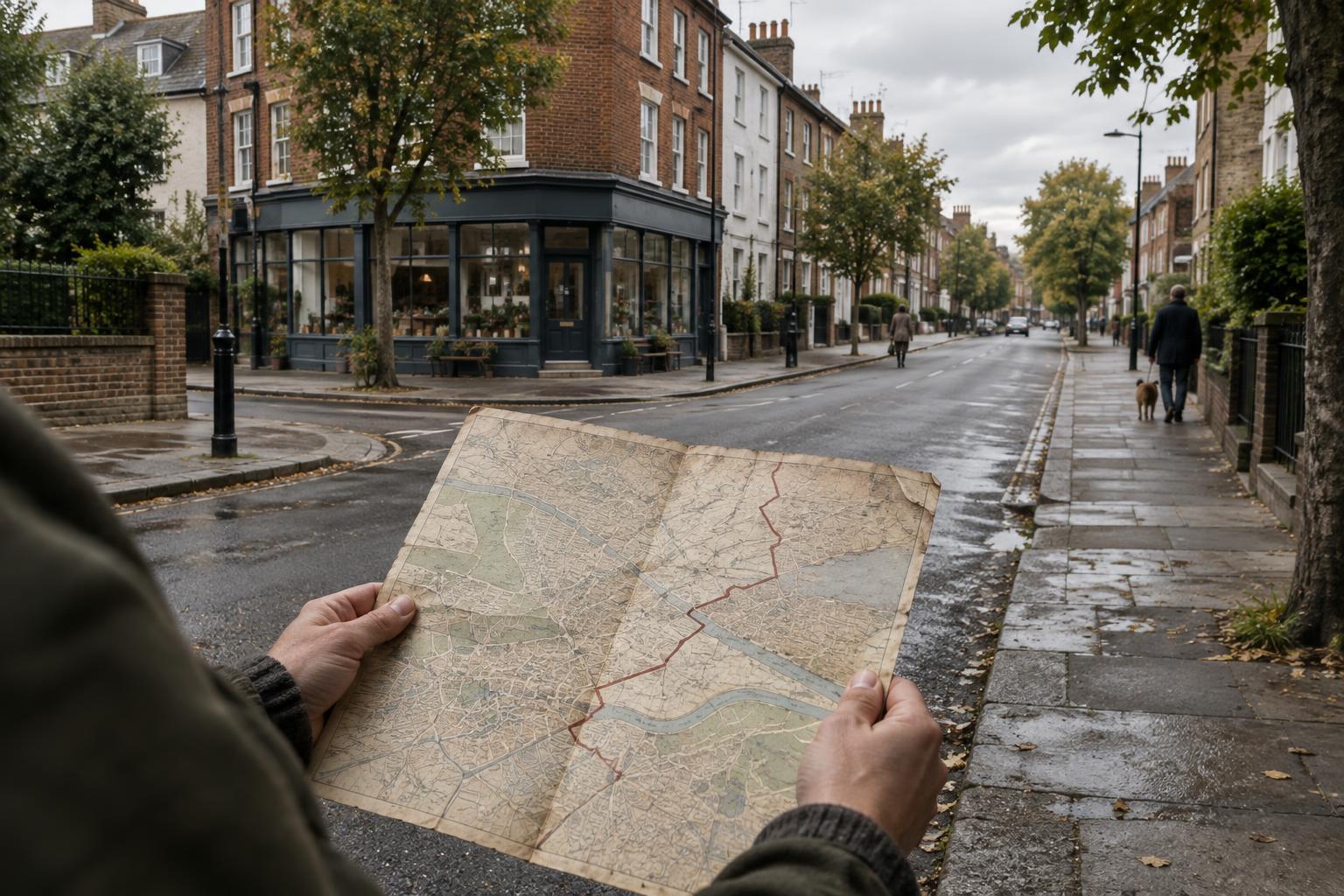
Maps make a city legible by reducing it to routes, boundaries and names. Photographs hold a different kind of detail: light on a storefront, the shape of an intersection, a face passing through a frame. Neither easily preserves the tempo of a place. The crossing signal that interrupts a conversation, the rattle of a delivery cart, or the sudden quiet inside a courtyard can tell us how a street is used, not just where it is.
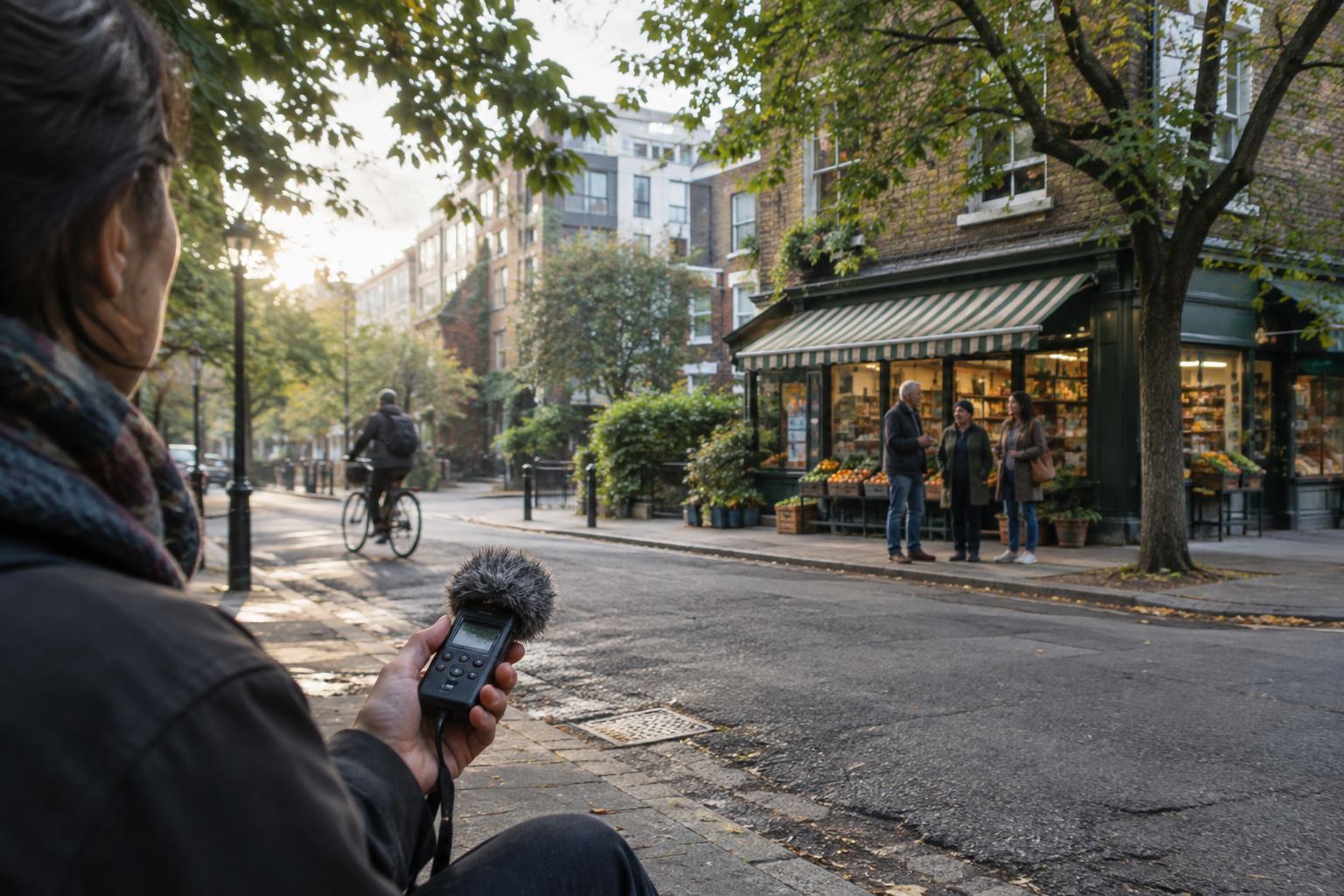
Begin with a place you can return to: a bus stop, a market entrance, a library stairwell. Spend a few minutes listening before you take out a phone or notebook. Notice sounds that repeat and sounds that arrive only once. Which noises seem close? Which are carried from another block? Is there a sound you expected but cannot hear? These questions make listening an act of attention rather than a hunt for an impressive recording.
Build a sound diary, not a catalogue of noises
A useful sound diary includes context. Record the location in your own words, the time of day, the weather as you experience it, and what you were doing when you noticed the sound. “Footsteps under the station canopy while I waited for a late bus” gives a future reader more to work with than “footsteps.” If you return to the same spot, keep the earlier entry nearby. A place may sound different when shops are opening, when school lets out, or when rain changes how people move through it.
Writing can capture details a microphone may miss. You can describe a voice without transcribing private speech, or note how a mechanical hum made it hard to hear someone beside you. Try separating observation from interpretation: first describe what you heard, then write what it brought to mind. A bell might remind you of a former neighborhood, but that memory is yours; another listener may hear it differently. Keeping both layers makes the account more honest and more interesting.
For a small project, choose one route and follow it several times. Give each stop a short entry, then look for transitions. Where does traffic fade into conversation? Where do indoor sounds spill onto the sidewalk? The spaces between recognizable landmarks may reveal the daily routines that give a route its character.
Record with care for the people who live there
Public sound is not the same as public permission. A recording may capture a personal conversation, a worker's shift, or an event whose participants do not expect to become part of someone else's story. Before recording, consider whether written notes would serve your purpose just as well. If a person's voice is central to what you want to publish, ask for their consent. In sensitive settings, describe the soundscape without retaining identifiable speech.
Care also means resisting the urge to turn unfamiliar sounds into a city's entire identity. A visitor might hear a street musician once and remember that moment vividly; a resident might think first of early deliveries or the quiet after closing. Mark the limits of your perspective. Rather than writing “this neighborhood sounds like,” try “on this walk, I heard.” That small shift leaves room for other experiences and for the place to change.
Turn listening into a story of change
Sound can help organize a piece of writing without becoming its subject at every moment. In an essay about a familiar street, a recurring train announcement might mark the distance between past and present visits. In fiction, the pause after a door closes might show a character becoming aware of being alone. In poetry, a repeated rhythm can hold a memory that resists a tidy description. Let the sound do specific work rather than adding it as atmosphere.
When you revisit your notes, ask what has changed in the place and what has changed in you. Perhaps the same crossing signal now reaches you through a new pattern of traffic. Perhaps you have simply learned to notice the people waiting beside it. You do not need to claim that one visit captures a city's definitive sound. A careful record of where you stood, what you heard, and what you could not know offers something more durable: a way for another reader to listen again.