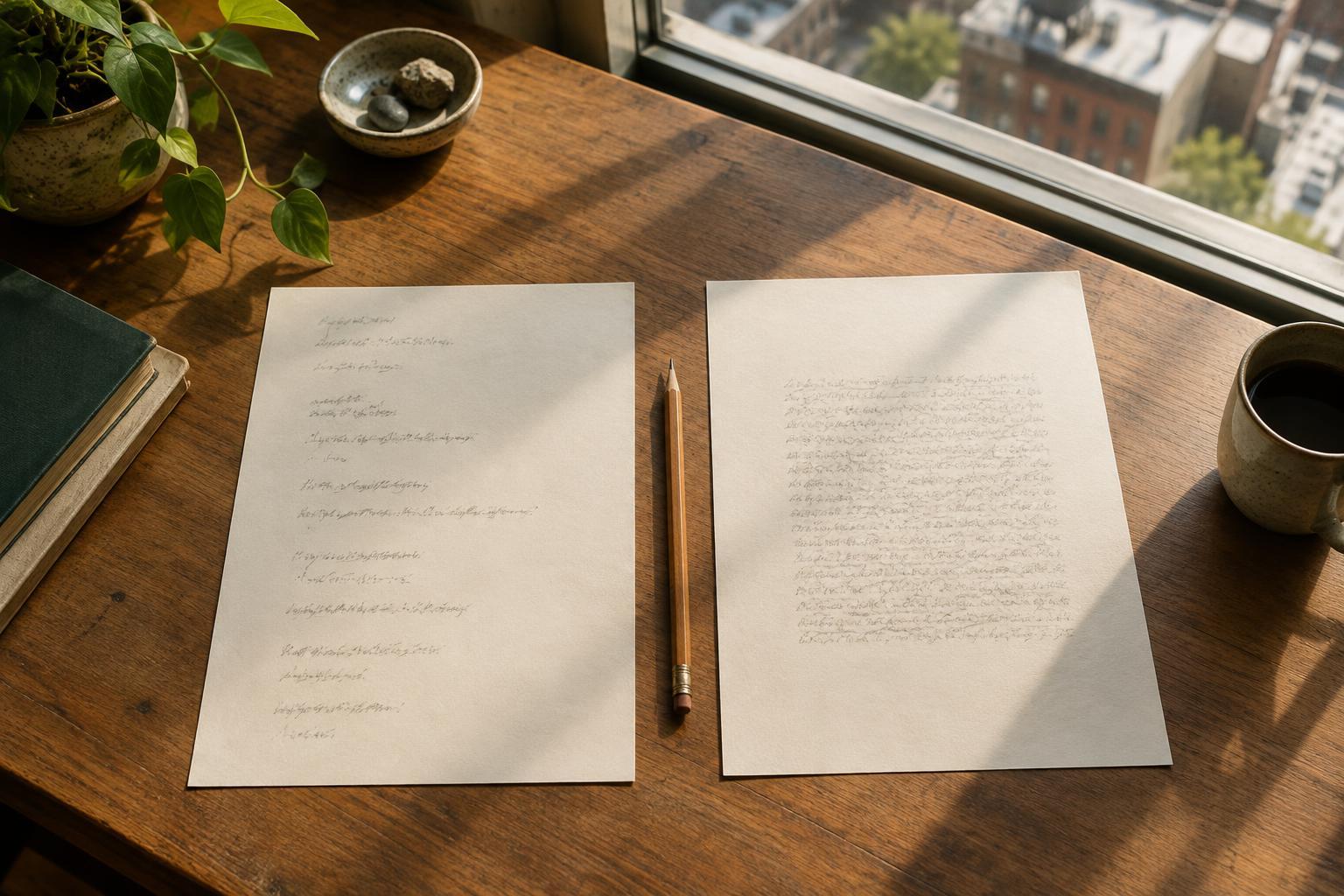
The difference is more than appearance
A lineated poem makes the line a visible unit of composition. Its writer decides where each line ends, even when the sentence continues. A prose poem usually presents its language in paragraphs, without deliberate line endings; the lines readers see depend on the width of the page or screen. It may look like a brief piece of prose, but its images, sounds, associations or turns of thought often ask for the concentrated attention we bring to poetry.
Neither form has a monopoly on rhythm or surprise. A prose poem can move in a tight, measured way, and a lineated poem can sound conversational. The useful question is not whether a draft looks poetic enough. It is what the chosen form asks readers to notice, and what it allows the writer to control.
Line breaks make pauses and possibilities visible
In a lineated poem, an ending can briefly suspend the reader before the next line changes the sense of what came before. A phrase might seem complete at the margin, then acquire a different meaning when the sentence resumes. This effect, often called enjambment, can create tension without adding an explanation. Even when a line ends at a natural stopping point, its position invites attention to the final word.
Line length also affects pace. Short lines may encourage a reader to take each phrase separately; long lines may carry an observation forward before offering a rest. These are tendencies, not fixed rules: punctuation, syntax and a reader’s habits matter too. Line breaks give the writer another means of shaping pace alongside those elements, while the surrounding white space makes each choice easier to see.
A prose poem shifts pressure onto sentences and paragraphs
Without chosen line endings, a prose poem must find other ways to hold attention. A sentence can gather details, change direction or stop abruptly. Repeated words can establish a pulse; punctuation can make a small hesitation or a sharp turn. A paragraph can build toward its last sentence or let an unexpected image interrupt a steady account. These decisions shape rhythm even though the text runs across the available space.
The paragraph can also create a productive tension between familiarity and strangeness. Readers may enter expecting an anecdote, description or argument. The poem can use that expectation while leaving room for leaps that a conventional explanation would close down. A description of a bus route, for instance, might move from stops and street names into a memory that alters the meaning of the journey. The form lets that shift unfold within a continuous block.
What changes in emphasis and space
A lineated poem can isolate a word or image simply by placing it on its own line. The space around it becomes part of the reading experience. In a prose poem, isolation usually requires another method: a short sentence among longer ones, a repeated phrase, a paragraph break or a striking change in tone. Because fewer words stand visibly apart, the writer may need to work harder to keep every image from receiving the same weight.
Prose does not mean a lack of space. Paragraph breaks can mark a change of scene or thought, and the end of a prose poem can leave a strong sense of what remains unsaid. Still, paragraph space works on a broader scale than the small intervals between lines. Moving a draft from one form to the other can therefore change which moments feel central, even when every word stays the same.
How to test the form of a draft
Try setting a lineated draft as a single paragraph, then read it aloud without trying to preserve its old line breaks. Notice where you now pause, which words lose emphasis and whether the sentences carry the movement on their own. Next, take a prose draft and break it into lines for a reason: to delay a word, connect two images or give a turn more room. If the breaks merely follow the page width, the paragraph may be doing better work.
There is no need to declare one version more poetic. A draft about a crowded street might benefit from a paragraph’s accumulating detail, while a draft about one remembered doorway might need the stillness of a short line. Choose the form that makes the poem’s particular movement legible. Then revise within that form, attending to the places where a reader is invited to pause, continue or look again.