Give each draft a clear address
A draft can become hard to find long before it feels finished. The poem you remember as “the bus stop piece” may have a different title on your computer; the story with the strong opening may be buried among files called “new version.” A small naming convention solves much of this confusion. Choose a short working title and add a version number: Bus Stop 01, Bus Stop 02, and so on. Use the same pattern whether you write in documents, notes, or a notebook index.
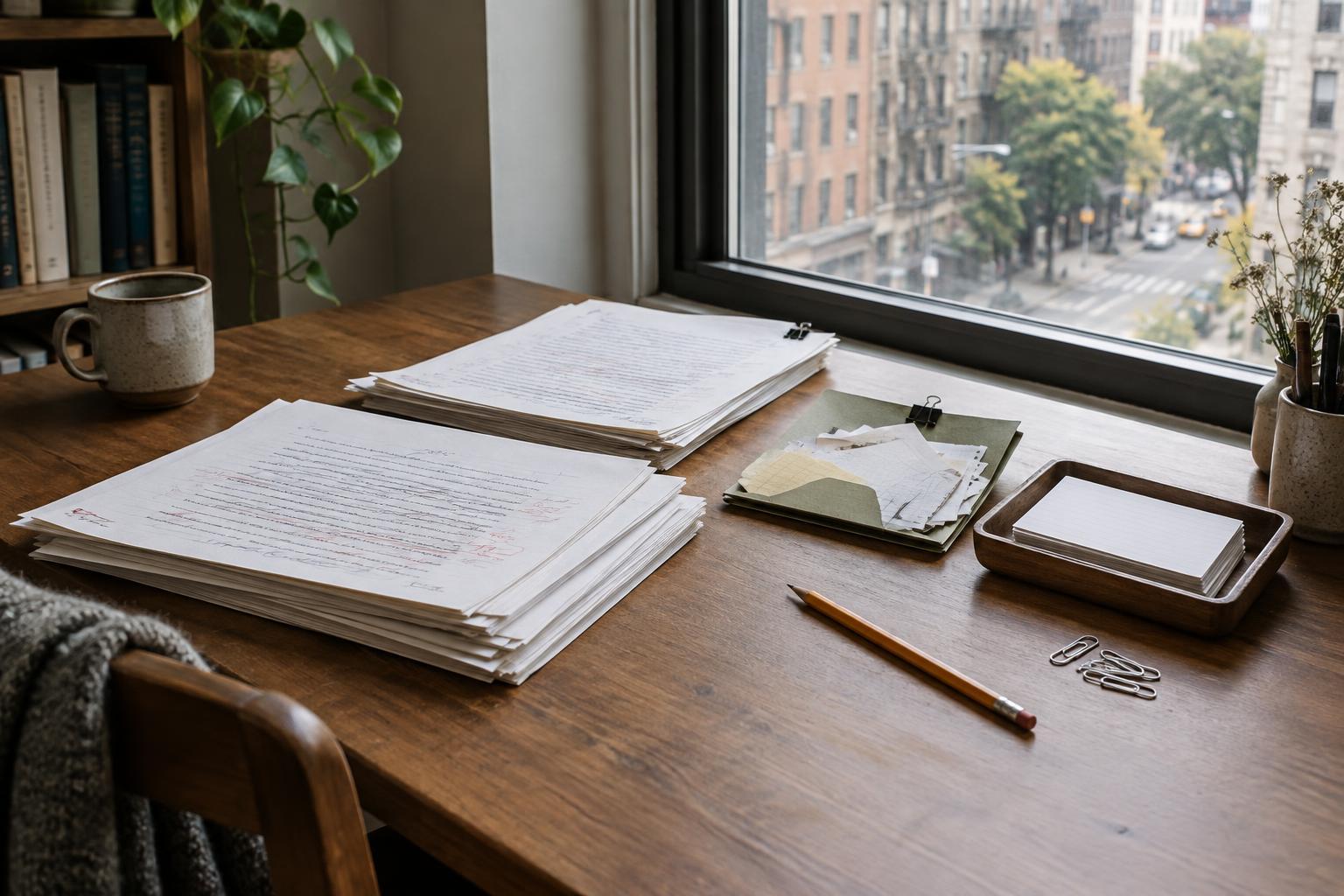
Keep all versions of a piece in one folder or clearly marked notebook section. You do not need to save a new copy after every corrected comma. Make a new version when you change something you may want to reconsider later: the speaker, the structure, the ending, or the central scene. This gives each saved draft a purpose and keeps the folder from becoming a maze of nearly identical files.
Record the reason, not just the change
A version number tells you what came next, but not why. Add a brief revision note at the top of each draft or in a separate log. A useful entry might read: “Moved the market scene to the opening to establish the setting sooner,” or “Cut the last stanza because it explained the image.” These notes need not defend every decision. They simply preserve the question you were trying to answer.
When you return to a piece after a break, the notes help you distinguish a deliberate choice from an accident. They also make it easier to assess a revision on its own terms. If you changed the point of view to bring the reader closer to a character, read the new draft with that aim in mind. Did the change create closeness, or did it hide something the earlier version revealed? A short record turns revision into a series of testable choices rather than a vague sense that the piece must keep changing.
Make a place for the material you cut
Some of the hardest revisions involve removing language you still love. A striking description may slow a story; a vivid line may pull a poem away from its subject. Instead of forcing the passage to stay, move it to a document labeled “Cut material” inside the piece’s folder. Include a few words about where it came from and what made you save it. Then return to the draft without treating the cut as a permanent loss.
This holding place is not a promise to reuse everything. Many fragments work because of the writing around them, and some will lose their appeal once separated from it. Others may suggest a different piece. Review the file occasionally, but do not let it become a second draft that you feel obliged to maintain. Its main job is to make a bold edit easier to try.
Keep an idea index separate from your drafts
Draft folders are good at holding work in progress, but loose observations need a different home. Keep one searchable list for images, questions, overheard rhythms, possible titles, and scenes you cannot yet place. Give each entry enough context to make sense later. “Train platform” may not help you months from now; “Empty platform after the last announcement; who is still waiting?” gives you something to write toward.
You can add a few simple labels, such as “place,” “voice,” or “conflict,” but resist building a system that takes longer to manage than the writing itself. An idea index is useful when you can open it quickly, add a thought, and leave. When a fragment grows into a draft, copy it into the new piece’s folder while keeping the original entry if it helps you remember where the thought began.
Build a habit of checking and protecting your work
Set aside a few minutes after a writing session to name the file, note any substantial changes, and put stray ideas where you can find them. At the end of a project or a period of focused work, look back through your saved versions. The goal is not to identify the single perfect draft. Look for patterns: endings you tend to overexplain, scenes that sharpen when moved, or images that keep returning in different forms.
Make a second copy of your work somewhere separate from the place you usually write, and check occasionally that you can open it. A clear filing system helps you retrieve ideas; a backup helps ensure those files remain available. Neither practice needs to be elaborate. The best system is one you will still use when a sentence has finally arrived and you would rather keep writing than organize anything.