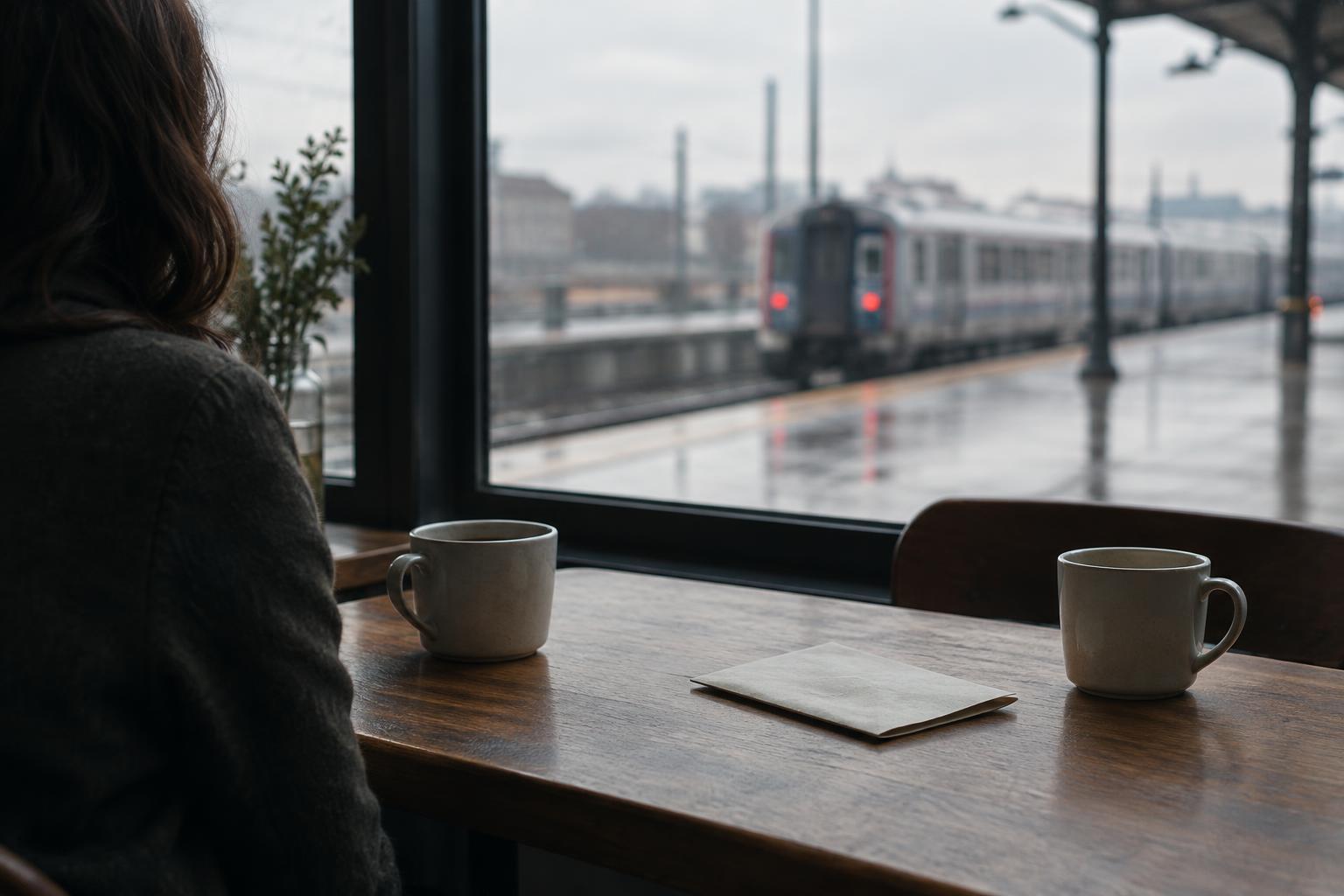
Let the first reading leave a trace
On a first pass, read for the experience of the story. Notice whose company you enjoy, where you feel uncertain and what changes by the end. You do not need to stop at every striking sentence. A short story can lose some of its momentum if you try to solve it before you have heard its whole rhythm.
Before returning to the beginning, write down a few impressions from memory. What do you think the story is about? Which image, exchange or decision stayed with you? Where did your expectations shift? These quick notes give you something to test on a second pass. They also preserve your initial response, which can be easy to forget once you know the ending.
Watch what the opening teaches you to expect
Read the first page again with the ending in mind. Look at the situation the opening presents and the questions it invites. A story may begin with an obvious problem, such as a missed meeting, while quietly introducing a less visible one: a habit of avoidance, a strained friendship or a place the narrator no longer feels able to call home. Ask which details seemed incidental at first and which ones acquire weight later.
Pay attention, too, to what the opening leaves out. Who is not named? What event is referred to but not explained? A gap is not always a riddle with a single answer. Sometimes it places you close to a character who also lacks information; sometimes it shows what that character cannot yet bring themselves to say. On your second pass, track when the story narrows or widens those gaps.
Trace the story’s movement through time
A short story does not need many events to have a strong shape. Mark where it slows down for a scene and where it passes over hours or years in a sentence. If it moves into a memory, ask what prompted that turn and why the memory appears there rather than earlier. The order of information can change how you understand a choice, even when the events themselves remain simple.
One useful question is: what is different after each scene? The answer might be a new fact, but it might also be a change in trust, attention or willingness to speak. If you cannot identify a change, look at what the scene repeats. A routine conversation can matter because one person responds differently this time. Tracking these small turns helps you see the story’s structure without reducing it to a plot summary.
Listen to voice and look closely at place
On a second reading, listen for the narrator’s habits. Do they describe other people precisely but speak vaguely about themselves? Do they turn a tense moment into a joke or linger over an object instead of naming a feeling? If the story uses a close third-person perspective, notice which observations seem shaped by the character’s concerns. Voice is more than a pleasing style: it can determine what the reader is allowed to notice.
Setting deserves the same attention. A street, apartment or train platform can be more than a backdrop, but it need not stand for one tidy idea. Watch how characters move through a place. Who knows its shortcuts? Who feels watched there? Which sounds or landmarks enter the story more than once? Such details can reveal attachment, distance or competing memories of a city without the story stating those themes outright.
Return to the ending, then compare your notes
Now reread the final page slowly. Identify what the ending resolves and what it leaves open. Does a character act, refuse to act or simply understand something differently? Look back for earlier details that prepare this moment, but resist treating every detail as a clue planted for a reveal. An ending can gather the story’s concerns without explaining them away.
Compare what you noticed this time with your notes from the first reading. Did an initially sympathetic character become more complicated? Did a minor object or brief silence take on a new meaning? Keep both readings in view. The point of a second pass is not to replace your first response with a correct interpretation. It is to understand how the story made that response possible—and to leave room for what remains unresolved.