Mistaking your discovery for everyone else’s
A writer arriving in an unfamiliar neighborhood may notice a narrow street, an old storefront or a building absent from the usual city guide. It can be tempting to call the place “forgotten.” But the word often describes the writer’s previous lack of attention, not the neighborhood itself. Residents may know its corners intimately; former residents may carry its names and routes with them; nearby communities may visit every week.
Before using the label, ask who has supposedly forgotten the place. Is it missing from a tourist map, overlooked in a municipal account or unfamiliar to your intended readers? Naming that narrower absence makes the sentence more accurate. “Rarely mentioned in visitor guides” says something different from “forgotten,” and leaves room for lives and memories that never depended on outside recognition.
Treating visible wear as a complete history
A shuttered shop or vacant lot can be a useful detail, but it cannot explain a neighborhood on its own. Describing only decay makes a place seem frozen at its lowest point, as though nothing happens there beyond loss. A street may also hold routine care: people tending plants, sharing meals, opening businesses or meeting friends. Those details do not cancel hardship. They keep it from becoming the only story.
Be equally careful with claims about what caused a building or block to change. From the sidewalk, a writer may see an empty window; they may not know why it is empty, how long it has been so or what the space meant before. In a scene, describe what can be observed. If the history matters, distinguish what is known from what remains uncertain rather than turning an image into an explanation.
Writing residents out of the frame
The phrase “forgotten neighborhood” can quietly cast an outsider as the person who gives a place its story. In that version, residents appear only as background figures or as evidence of authenticity. Even well-meant praise can flatten them: a neighborhood is more than its resilience, charm or ability to inspire a visitor.
When writing nonfiction, consider whose accounts shape the piece and whether you have made room for different relationships to the place. A longtime resident, a recent arrival and someone who moved away may remember the same street differently. If you have no access to those perspectives, keep the scope of your claim modest. In fiction, characters need not speak for an entire community; they can have particular habits, disagreements and reasons for being where they are. Specific people make a setting fuller than a sweeping label does.
Confusing official memory with lived memory
A missing plaque or sparse archive may suggest a gap in public recognition. It does not prove that a place has gone unremembered. Stories can persist in family conversations, everyday names for buildings, familiar paths and small rituals of return. At the same time, personal memory is not a simple substitute for records: it can be partial, contested and shaped by distance.
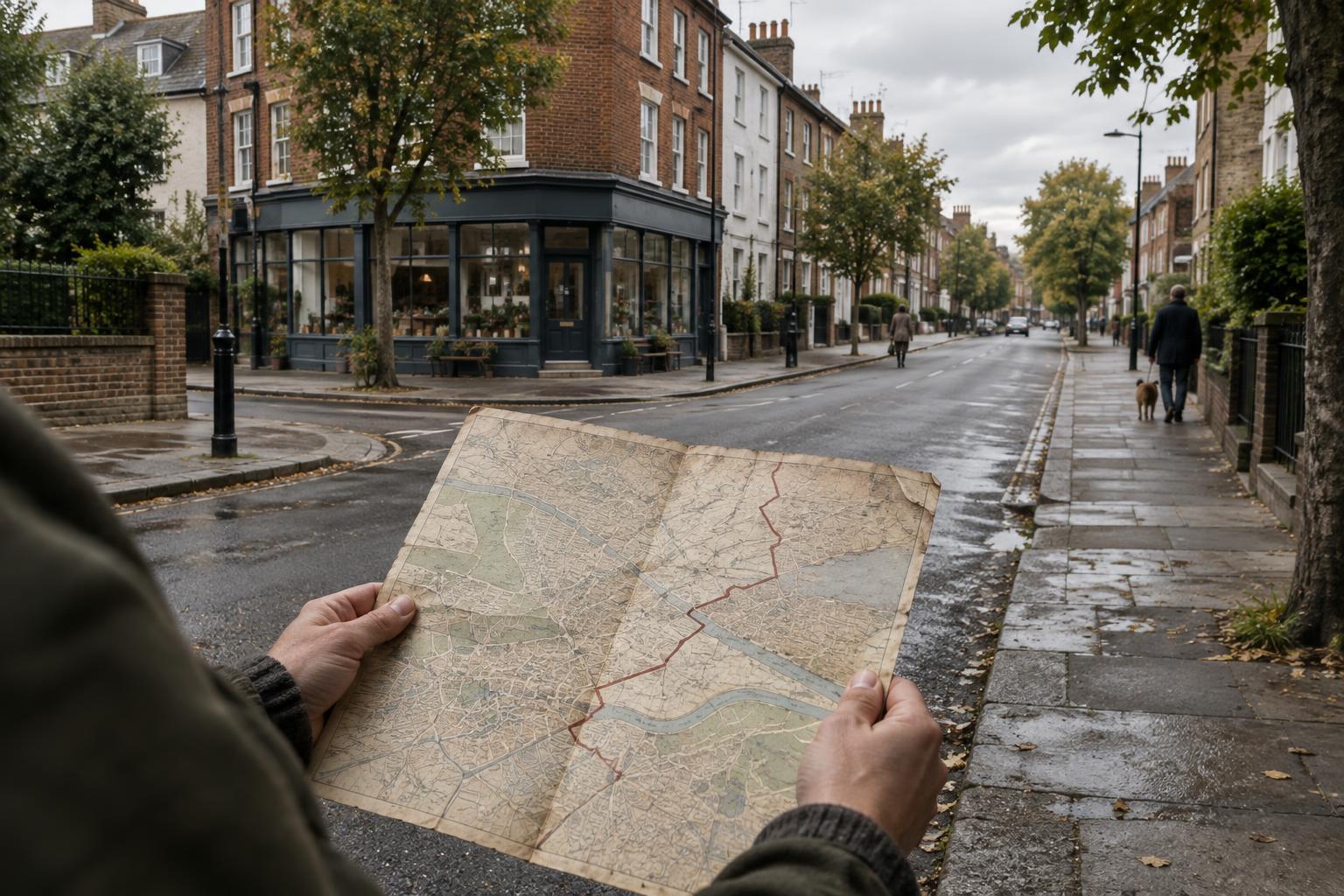
That tension can give an essay or story its energy. Rather than announcing that history has vanished, show two accounts meeting. Perhaps a map uses one name while a character uses another, or a renovated room serves a new purpose while someone remembers what stood there before. The aim is not to decide which memory owns the neighborhood. It is to let readers understand what each account preserves and what it leaves out.
Letting a dramatic label replace a precise question
“Forgotten” offers a quick mood, but it can blur distinct subjects: neglect of public space, the loss of a familiar meeting place, uneven coverage in city histories or a narrator’s own uncertain memory. Each could support a different piece. Revising the label into a question helps reveal the real subject: Who is absent from this account? What changed here? Which details endure, and for whom?
A useful final pass is to look for places where the neighborhood seems to exist only in the past. Add present-tense activity when it belongs in the piece, and check whether any claim of disappearance overlooks people who remain. You may still choose the word “forgotten,” especially if a character says it or the article examines it directly. Make clear whose word it is. Precision will do more for a neighborhood’s story than a promise to uncover it.