A break changes how a reader moves
Paragraphs organize information, but they also organize time. A long paragraph can keep a reader inside a continuous stretch of observation or thought. A short one can make a turn feel sudden. The blank space between them offers a small pause, even when the story itself does not stop. That pause affects what the reader expects from the next sentence.
Consider a character walking home and noticing that every shop on the block has closed. If the walk, the storefronts and the character’s speculation share one paragraph, the details may feel like part of an unfolding impression. If the discovery stands alone in a new paragraph, it becomes a point of change: the reader is invited to ask why this detail matters now. Neither choice is inherently better. The question is whether the break matches the attention you want the moment to receive.
Paragraph length is not a reliable speed setting on its own. A long paragraph filled with brief actions may move quickly, while a single sentence can slow a reader down if its meaning is difficult or unsettling. Breaks work alongside sentence rhythm, detail and context. Think of them as one way to guide the reader’s attention, not as a substitute for shaping the prose within each paragraph.
Use breaks to mark a change, not just a pause
A new paragraph often signals that something has shifted: the speaker, the focus of attention, the location, the time or the direction of a thought. In dialogue, a change of speaker usually calls for a new paragraph because it helps the reader follow the exchange. In a descriptive passage, the shift may be subtler. A narrator might move from watching rain on an apartment window to remembering a different street. The break can help the reader cross that distance.
In reflective prose, breaks can make an argument or realization easier to follow. One paragraph might establish what a character believes; the next might begin with evidence that unsettles that belief. Keeping both movements together could blur the turn. Separating them gives the reader a chance to register the first idea before meeting its complication.
Not every change needs its own paragraph. If each gesture, image or passing thought receives a separate line, the page can become choppy and every detail may seem equally significant. Related details often gain force by accumulating together. Let a paragraph develop an idea long enough for the reader to understand it, then break when the next sentence asks them to look in a meaningfully different direction.
Give emphasis to the moments that earn it
An isolated sentence draws attention partly because it is surrounded by space. That can be useful after a dense passage, at a turning point or when a plain statement changes the meaning of what came before. Suppose a narrator spends a paragraph describing the familiar sounds of a busy building: doors closing, voices through the walls, footsteps overhead. A separate sentence—The upstairs apartment was empty.—could make those sounds newly strange.
The effect weakens when every important sentence stands alone. Readers learn the pattern, and the space stops feeling selective. Before isolating a line, ask what changes because it is separate. Does it sharpen a contrast, allow an image to linger or prepare the reader for a shift? If its only job is to announce that the sentence is important, the prose may benefit more from a clearer setup than from extra white space.
Emphasis can also come from restraint. A consequential detail placed at the end of a developed paragraph may feel quiet but persistent, carrying into the next one without demanding an immediate reaction. Choosing between that effect and a standalone line depends on the voice of the piece. A watchful narrator might let a discovery sit among ordinary details; an unsettled narrator might experience the same discovery as a break in thought.
Revise by testing the page’s rhythm
When revising, read a passage once for meaning and again for its movement. Notice where you want to hurry, where you need a breath and where you lose track of the subject. If a paragraph contains several distinct actions or ideas, try dividing it at the point of change. If a run of short paragraphs feels abrupt, try joining related ones and see whether their details build on each other.
You can also test a break by moving it one sentence earlier or later. Placing a revealing sentence at the end of one paragraph may make it feel like a conclusion. Moving it to the start of the next may make it feel like a new problem. Read both versions without trying to defend your first choice. The stronger arrangement is the one that makes the intended relationship between the sentences easier to feel.
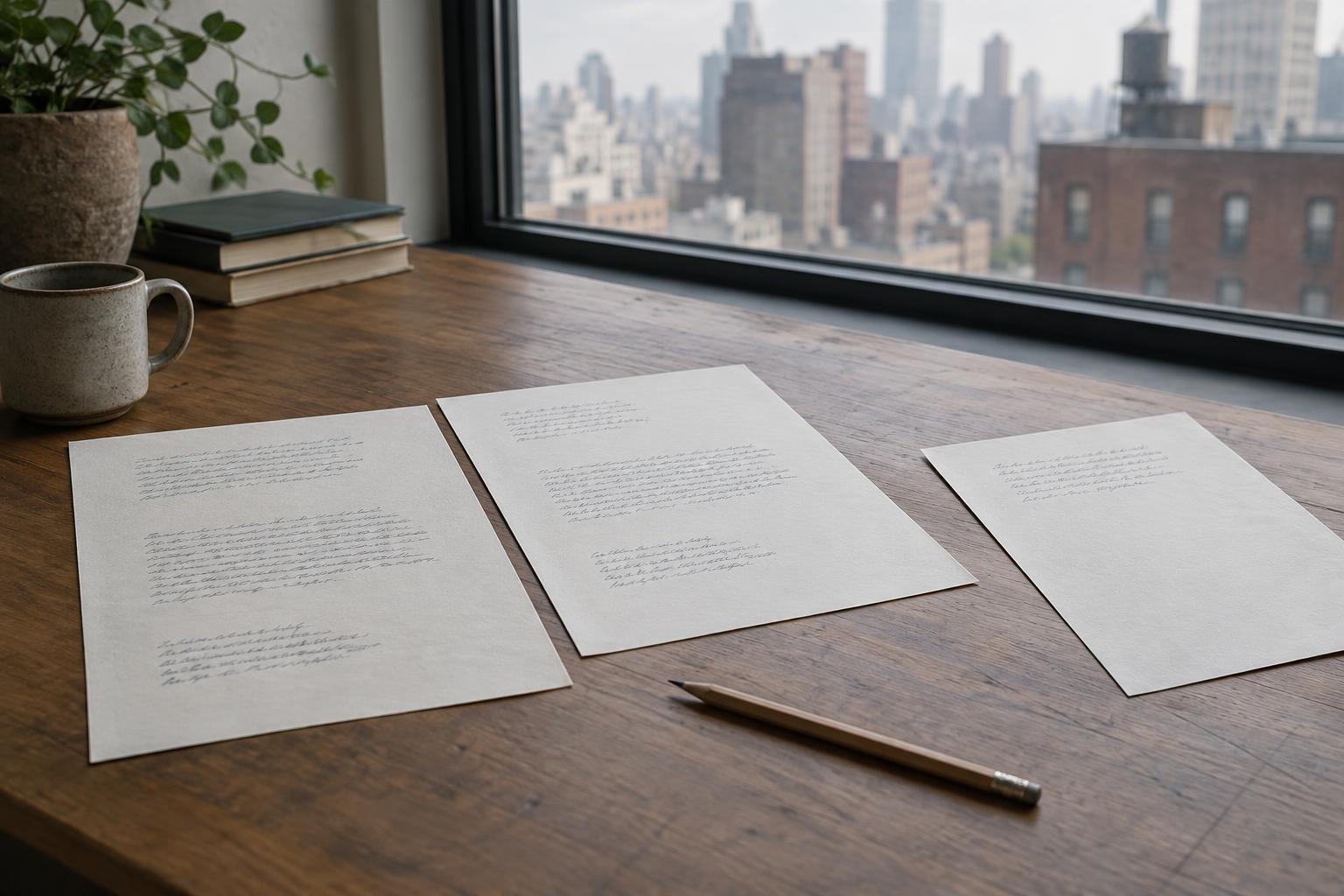
Finally, look at the page as well as the sentences. Large blocks of text can be demanding, but a page of isolated lines can give the impression of constant interruption. Visual variety is useful when it grows from the prose’s actual turns. The goal is not a pleasing pattern of long and short paragraphs; it is a rhythm that helps the reader notice what matters and keep moving through the story.