A complete experience in a small space
A short story is a work of fiction that creates a complete reading experience within a limited span. It may follow one encounter, several connected moments, or a longer period seen through a narrow lens. What matters is not a fixed word count but the relationship between its parts: the story gives readers enough to understand what is at stake, then stops when its central movement has reached a meaningful point.
That does not mean every question must be answered. A story can end with uncertainty about what a character will do tomorrow while making clear what has changed today. Nor does it need a dramatic event. A conversation on a bus, the return of a borrowed object, or a walk through a familiar neighborhood can carry a story if the experience brings a tension into focus.
Scope: choosing what the story can hold
Scope is the boundary a writer places around the material. A novel might trace how a family changes across generations; a short story could concentrate on the afternoon one family member decides not to repeat an old habit. The larger history still matters, but it enters through the present moment: a remembered phrase, an awkward silence, or the way someone hesitates at a doorway.
A useful starting question is, “What is happening now that cannot simply continue as before?” The answer may be external, such as a visitor arriving, or internal, such as a character finally recognizing why a place feels different. Once that pressure is clear, it becomes easier to decide which scenes belong. A scene that deepens the pressure or alters a choice earns its space; one that only explains the character’s entire past may not.
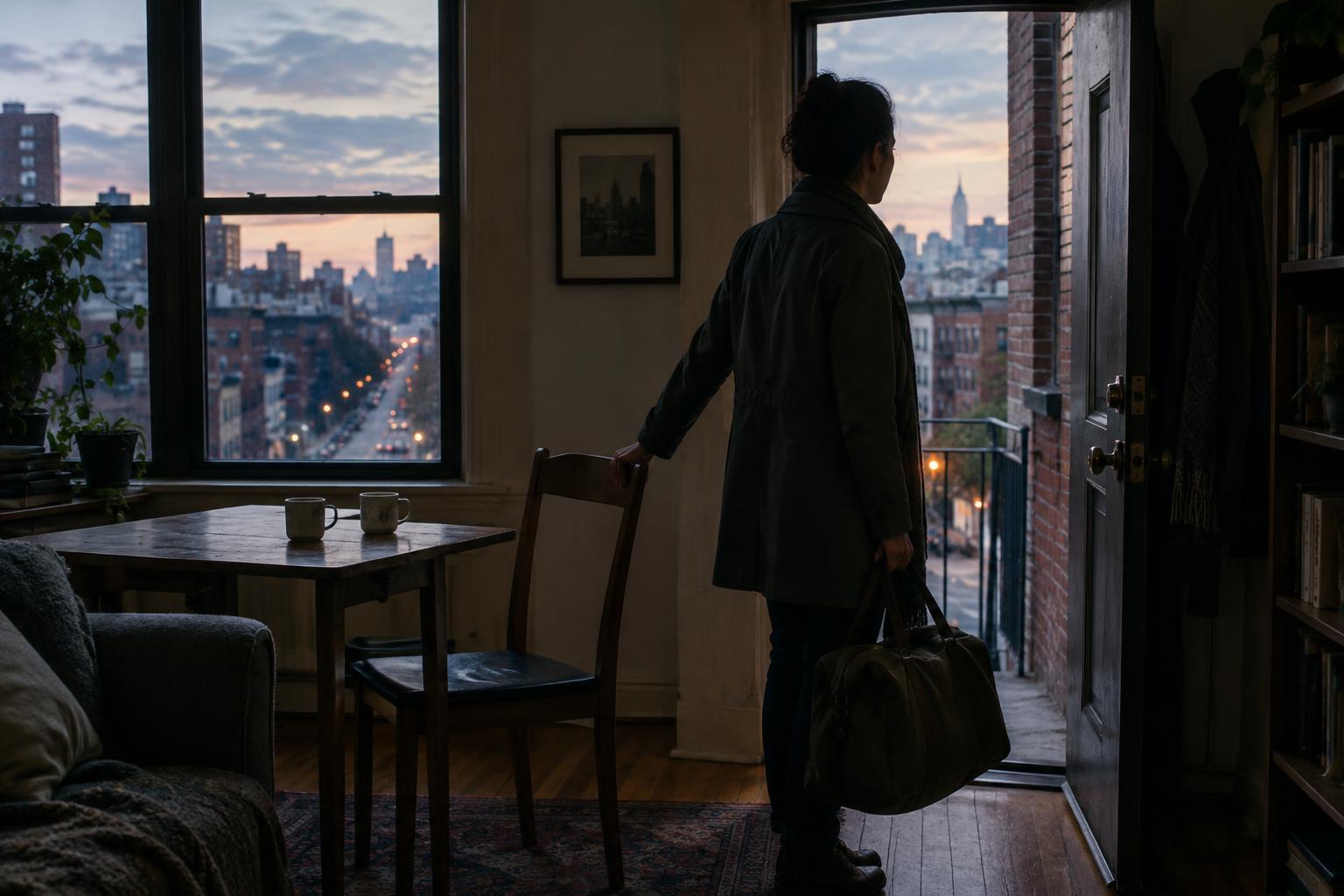
A narrow scope need not produce a small world. A story set at a single kitchen table can suggest a city beyond the window through a siren, a changed street name, or the languages its characters use with one another. These details are most effective when they matter to the people in the scene, rather than appearing as a catalogue of setting.
Compression: making details work together
Compression is often mistaken for speed. In a short story, it means that choices do more than one job. A description can establish a place while revealing what a character notices. A brief exchange can show affection and disagreement at once. An object introduced early can return later with a different meaning. The writer is not merely cutting words; they are finding connections among them.
Consider a character carrying a house key after moving away. At first, the key might be an ordinary thing forgotten in a pocket. Later, when the character stands outside the old building, it could raise a question about belonging or permission. The object does not have to symbolize one tidy idea. Its value comes from the way its meaning shifts with the character’s situation.
Compression also makes room for omission. Readers can infer a strained relationship from what two people avoid saying, provided the story offers enough context to make the silence legible. If too much is withheld, though, mystery becomes confusion. Revision can help: look at each gap and ask whether a reader has a reason to care about what is missing, as well as a foothold for understanding it.
Change: finding the shape of an ending
Many short stories turn on a change, but that change need not be a transformation of personality. A character may gain knowledge without acting on it, lose confidence in a familiar explanation, or make a choice whose consequences remain unknown. Sometimes the change occurs chiefly in the reader’s understanding: a final detail casts an earlier scene in a new light.
An ending feels earned when it grows from pressures already present. A surprise alone may be memorable, but it can feel detached if nothing in the story has prepared for it. By contrast, a quiet ending can carry force when a small action answers a question the opening raised. The character who could not enter a room may step inside; the one who always explains themselves may decide to listen.
To test a draft, name its central pressure in one sentence, then compare the opening and ending. What can the character do, know, or see differently by the end? Which details helped bring about that difference? If the answers are hard to find, the story may need a sharper focus rather than a bigger event. Short fiction has room for complexity precisely because it asks each chosen moment to count.