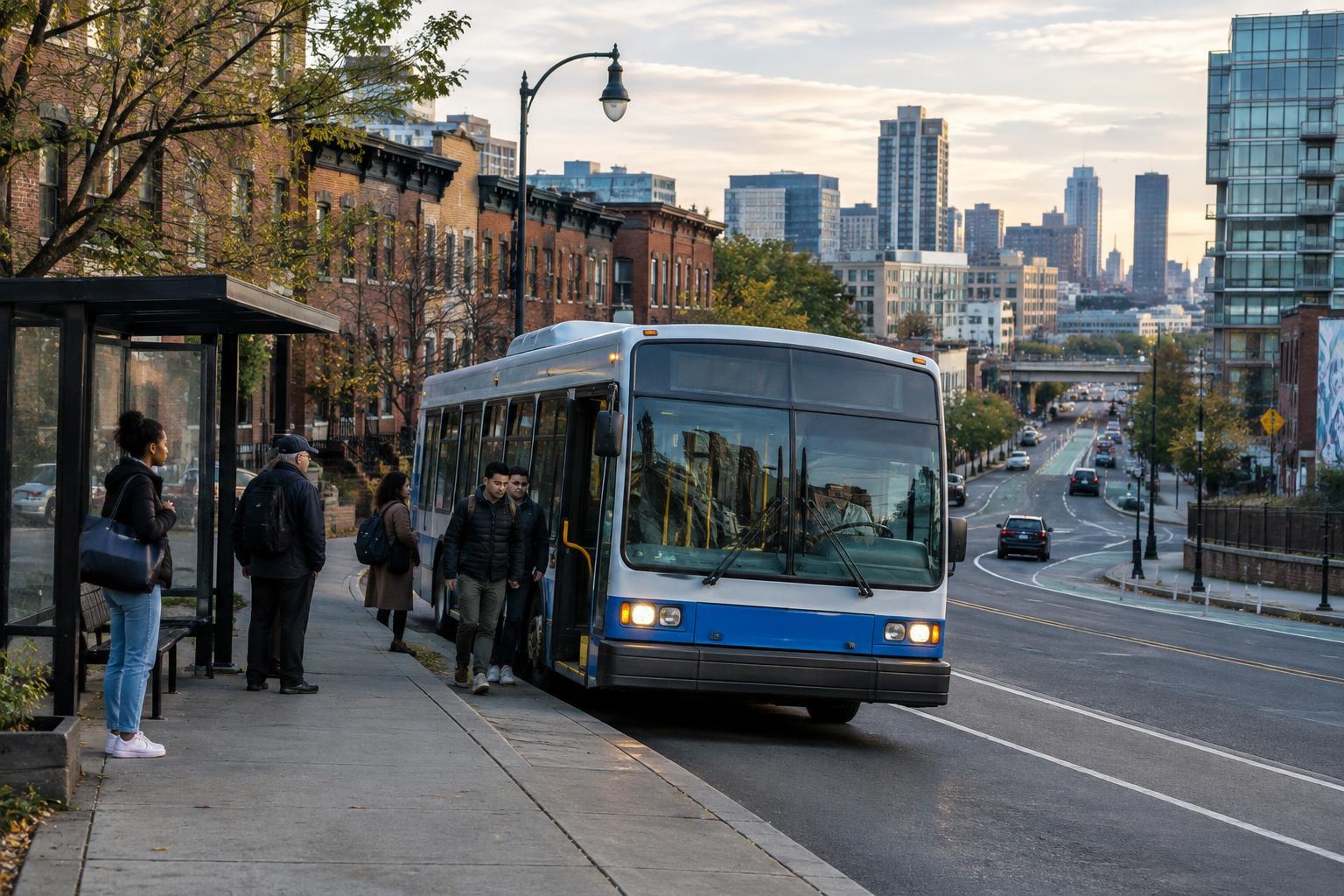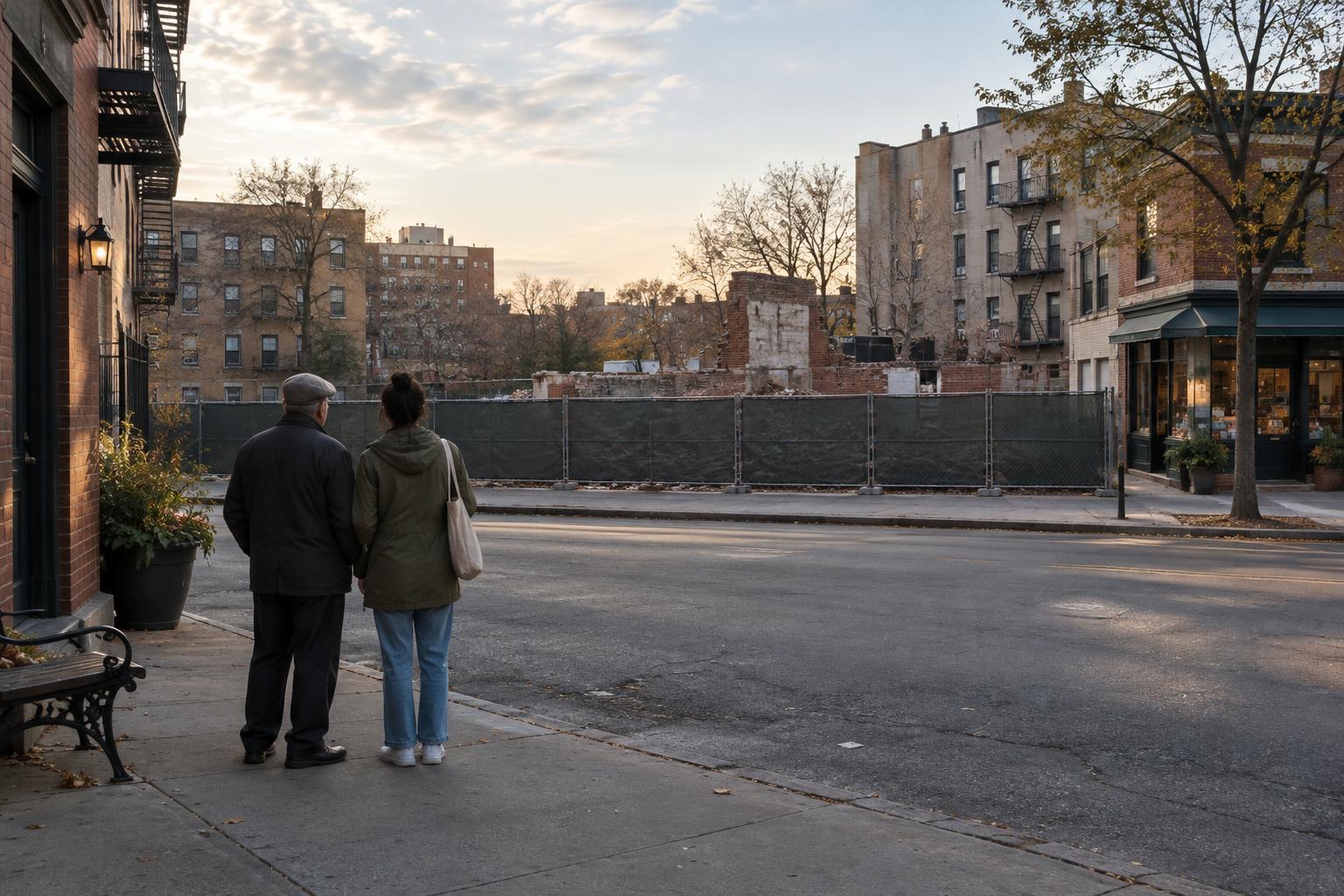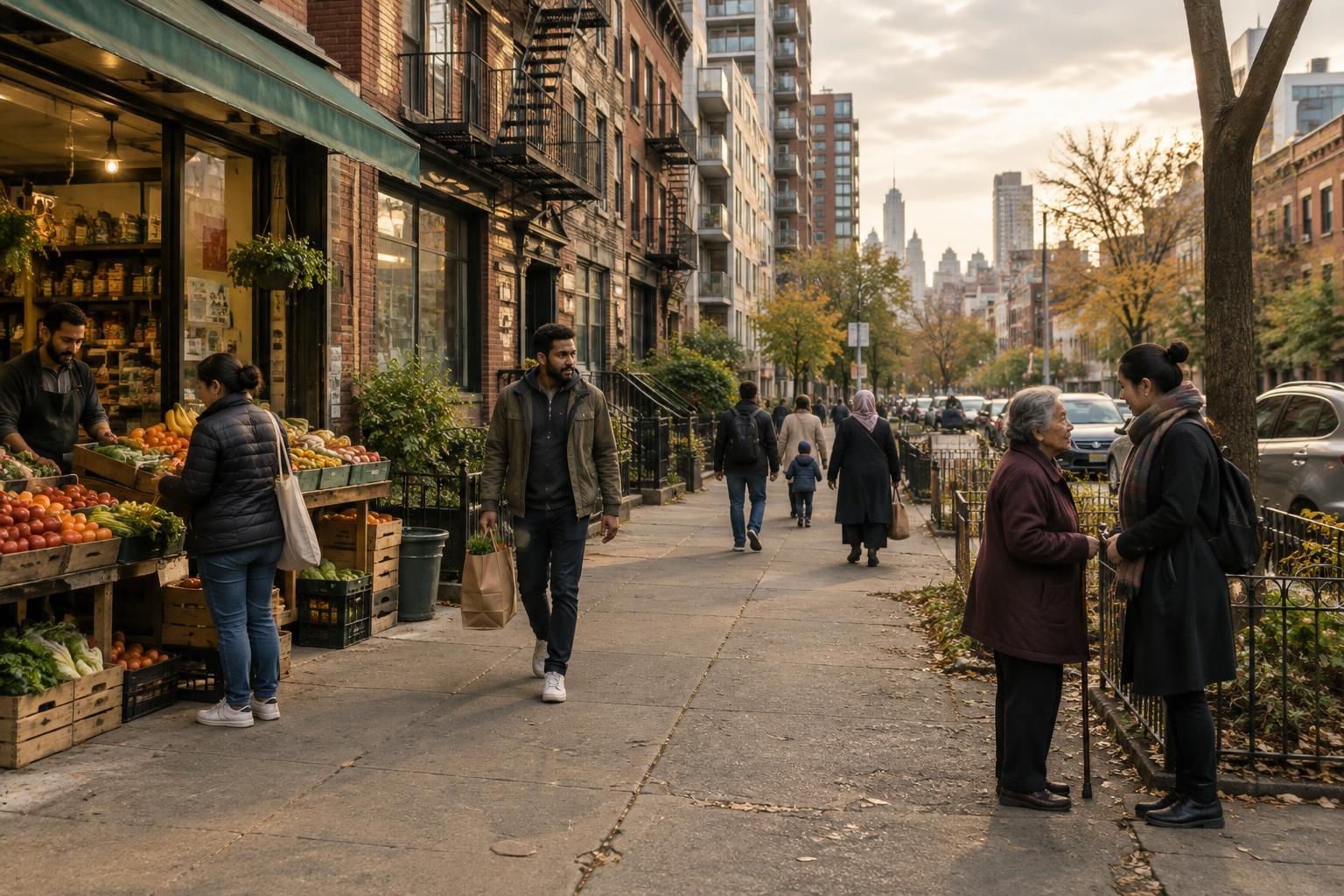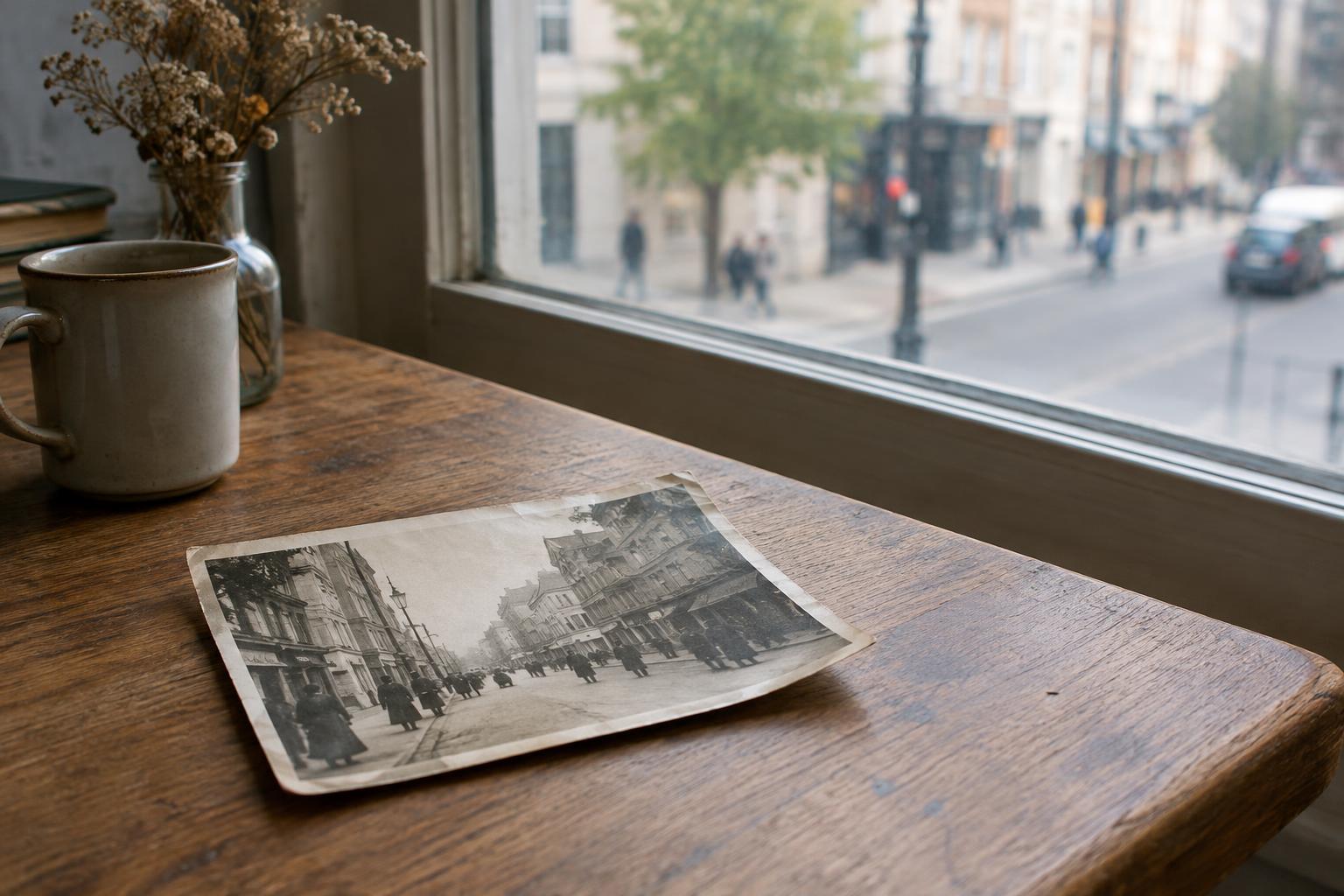
Begin with what the frame holds
An old street photograph invites a quick story. A tram track suggests movement; a faded shop sign suggests a vanished trade; a group of children on a curb makes a place feel familiar. Before building that story, it helps to slow down and describe what is actually visible. Where does the road meet the pavement? Which buildings appear to have been altered? What kinds of goods, vehicles or public notices can you identify? Description may feel less satisfying than interpretation, but it gives interpretation a firmer footing.
The photograph can also show relationships between things. A narrow entrance beside a broad storefront, or a bench placed far from the busiest corner, may reveal something about how the street was arranged. Yet an arrangement is not an explanation. The camera preserves light reflected from one place at one moment. It does not tell us whether that moment was ordinary, staged, festive or interrupted.
Ask who made the picture and why
A photograph is a record of a decision as well as a record of a street. Someone chose where to stand, when to press the shutter and what to leave outside the edges. A property owner might emphasize a clean facade; a visitor might seek a picturesque crowd; a resident might photograph a friend and capture the street almost by accident. If the maker or purpose is known, that context can guide a reading. If it is unknown, the gap should remain visible rather than being filled with a confident guess.
Look closely at the point of view. Does the camera face a landmark while turning its back on nearby homes? Are people looking into the lens, suggesting that they noticed or participated in the picture? Is the image taken from an elevated position that makes the street appear orderly? None of these clues settles the photographer’s intent. They do, however, remind us that a photograph is a view from somewhere, not a complete account from nowhere.
Notice what a still image cannot carry
A street has sounds, smells, routines and rules that a still image cannot directly preserve. It cannot show how long someone waited for a bus, whether a doorway felt welcoming or which neighbours greeted one another by name. Nor can the presence of a person in the frame tell us how that person understood the place. Clothing, posture and location may invite questions, but they are poor substitutes for a life story.
Absence is especially easy to misread. An empty pavement does not prove a street was quiet; a photograph may have been taken early in the day or during a brief lull. A missing building might have stood just beyond the frame. Even a clear date, when one is available, identifies the photograph’s moment rather than every stage in the street’s history. One picture is best treated as evidence of a particular view, not as a verdict on an entire neighbourhood.
Read across time without forcing a before-and-after tale
Comparing an old photograph with a present-day street can be illuminating. A doorway may remain while the business behind it changes; a widened road may alter how pedestrians move; a tree may outlast the sign beside it. These details help make change specific. They also keep us from describing a whole street as simply improved or declined, judgments that often depend on whose needs and memories count.
If several images exist, compare their vantage points and apparent purposes before treating differences as a timeline. One photograph might focus on traffic and another on a celebration. The changing subjects could reflect changing life on the street, or merely changing reasons to take pictures. Written records and people’s recollections, when available, can add context, though they too have limits. The aim is not to find one perfect account, but to see where different accounts meet and where they do not.
Let uncertainty make room for better stories
For a writer, an old photograph can be a useful prompt precisely because it is incomplete. A shop window might spark a fictional scene, while an unfamiliar street name might lead to questions about who named it and who uses it now. The distinction between invention and evidence matters: fiction can imagine what happened beyond the frame, but an essay about a real street should make clear when it is observing, inferring or imagining.
A practical approach is to make three short notes. First, list details you can point to in the image. Next, write down questions those details raise. Finally, mark what the picture cannot answer on its own. This small separation helps a street remain more than scenery for a tidy story. An old photograph may not give us the street’s full memory, but it can teach us how to look, ask and listen more carefully.