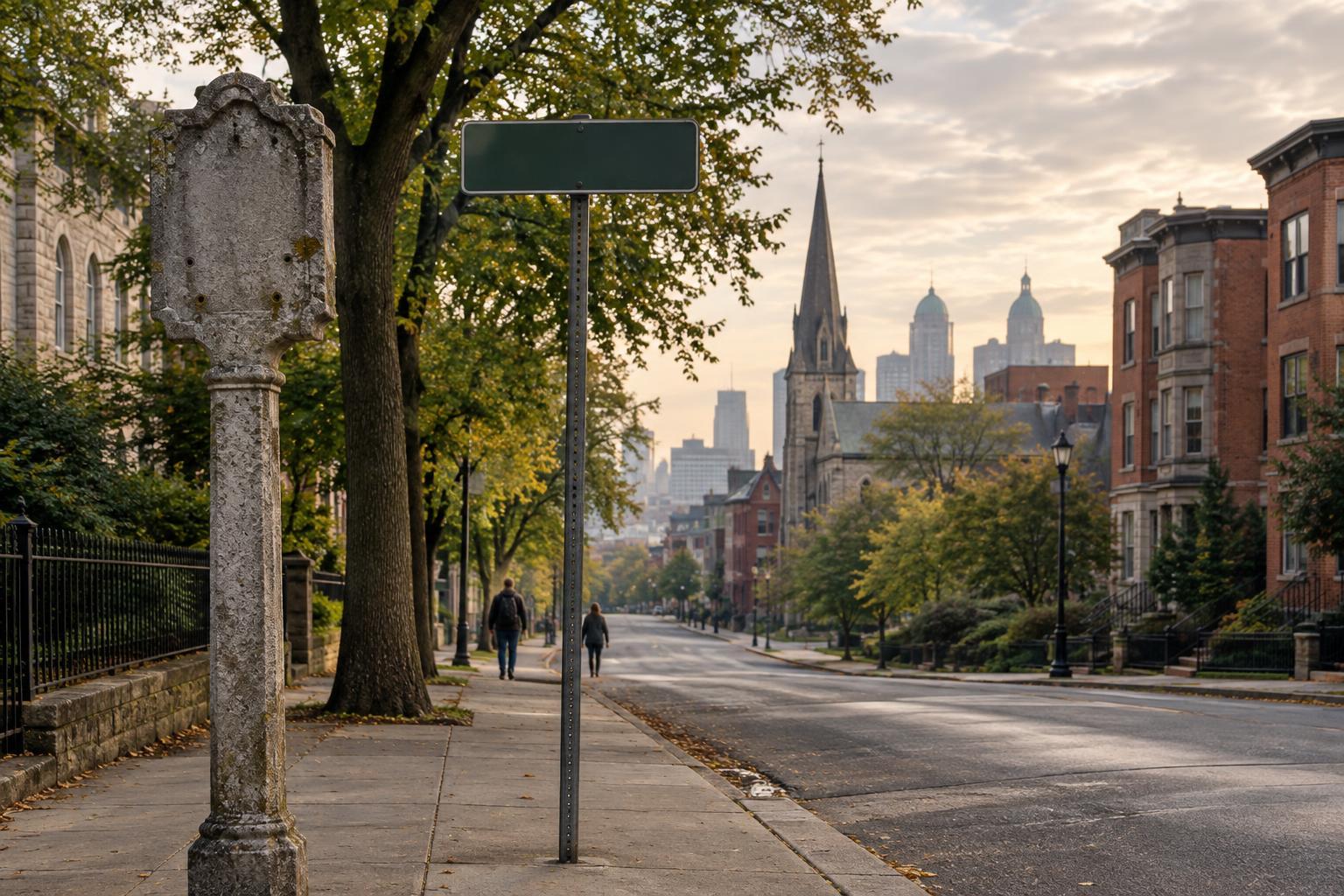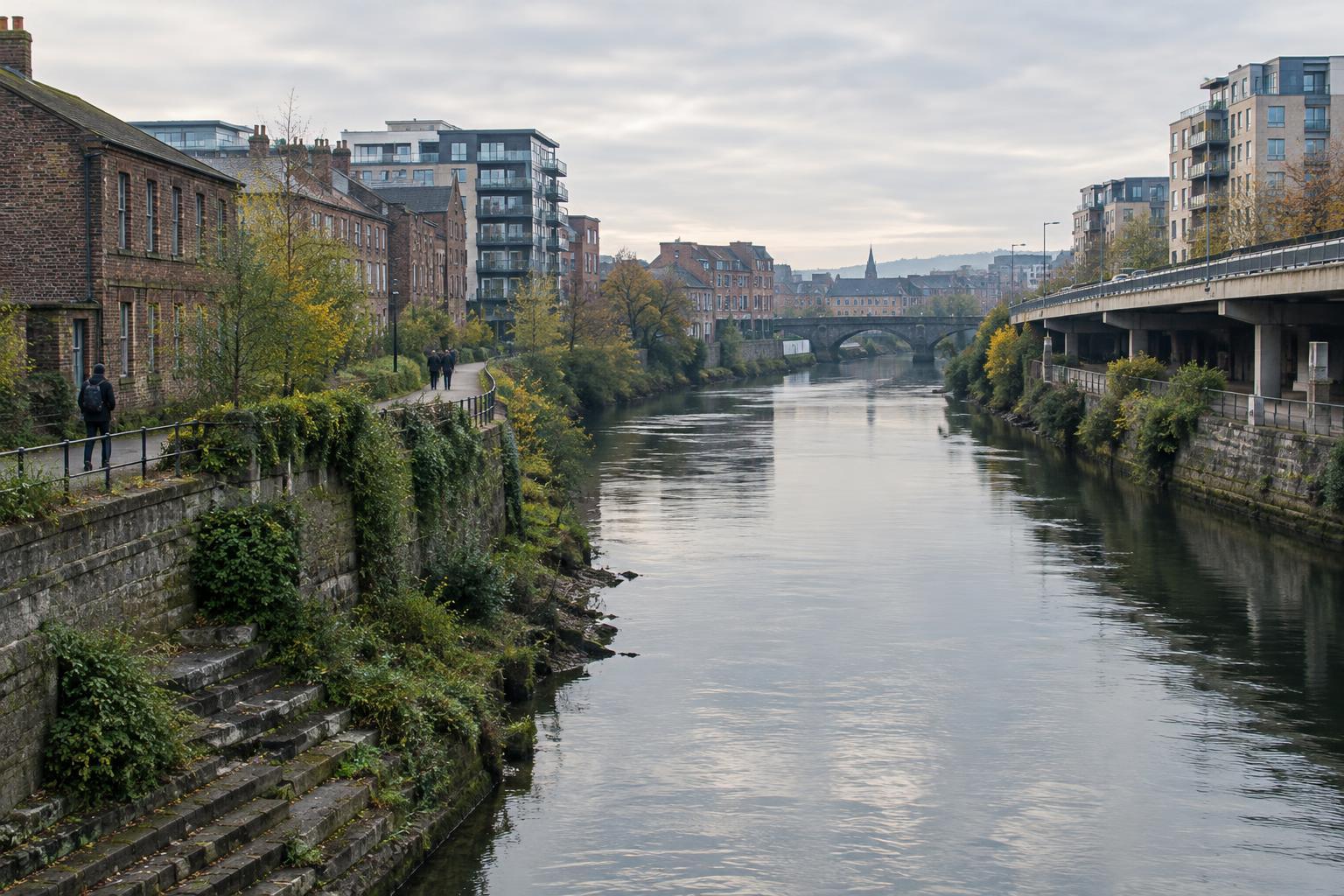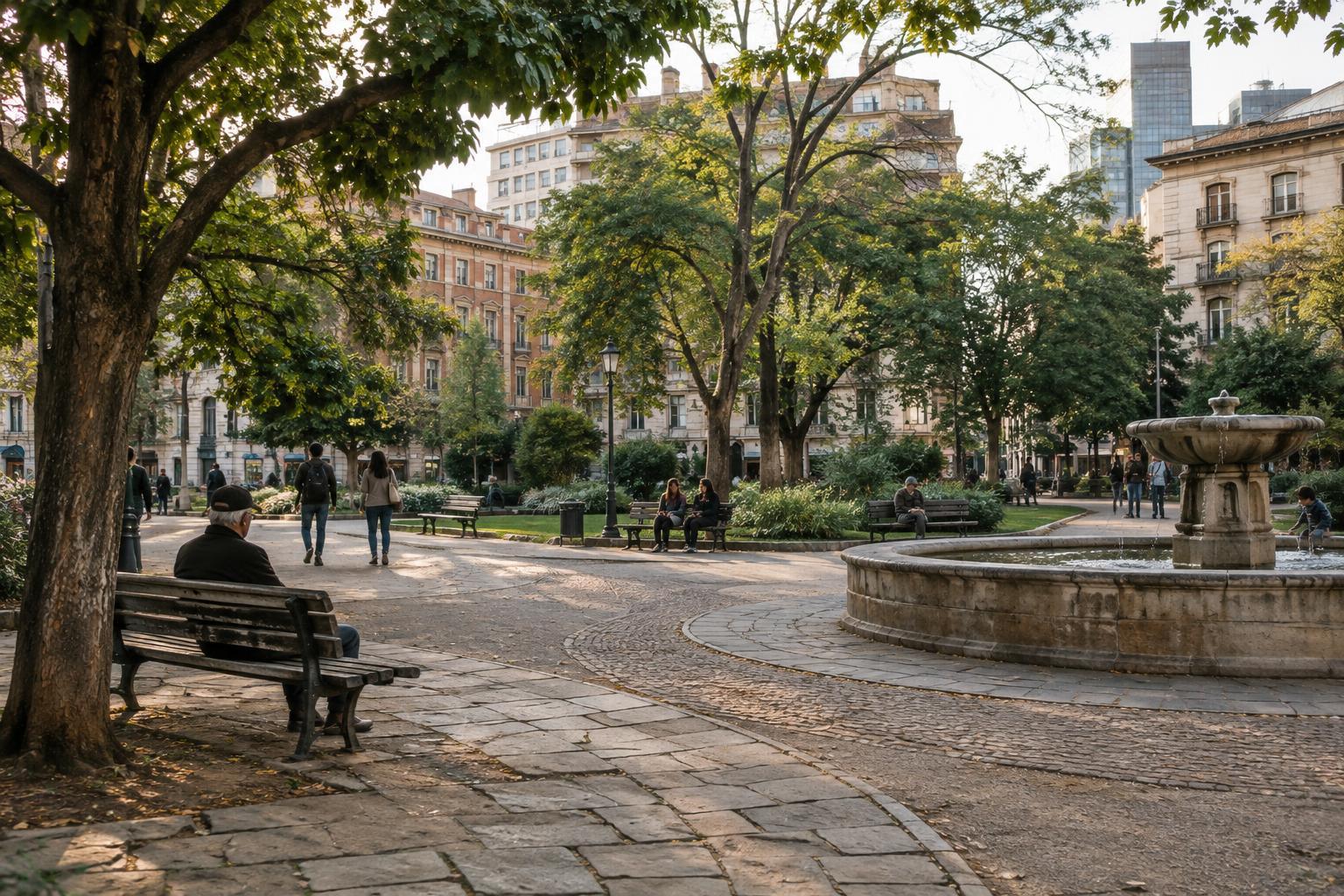
Begin with the building as it stands
An older city building rarely tells one continuous story. Its doorway may belong to one period of use, its windows to another, and its ground floor to a much more recent business. Rather than trying to guess its original appearance, start with what is there now. Stand somewhere you can look without blocking an entrance. Notice the building’s height, its relationship to its neighbors, the materials you can see, and the ways people enter and leave.
Then widen the frame. Does the building meet the sidewalk directly, or sit behind a small open space? Is it part of a row of similar structures? How do the nearby shops, homes and public spaces affect the way it is used today? These observations cannot supply a complete history, but they make the building legible as part of a street. The city around it is one of its layers.
Look for changes, not just age
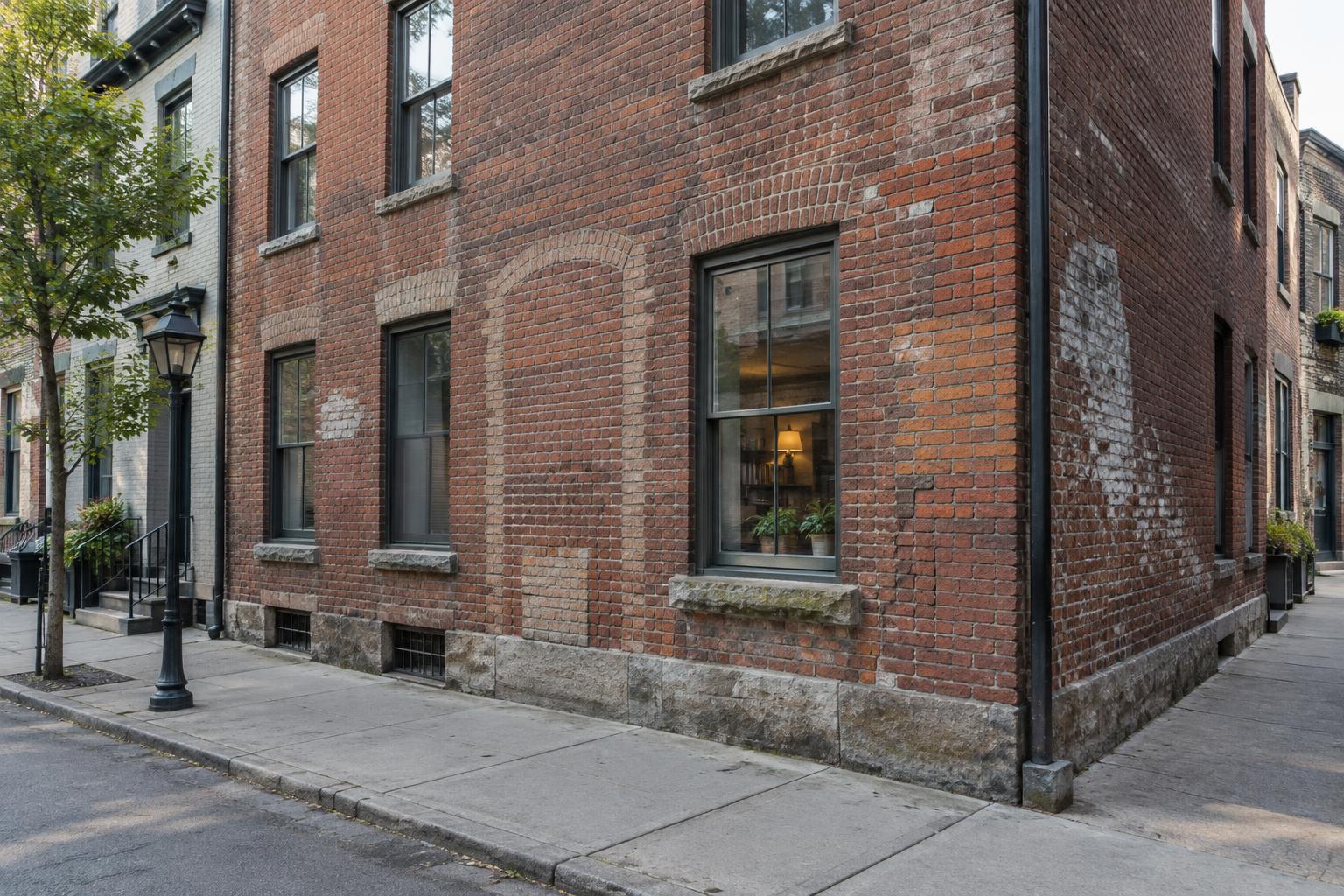
A patch of different brick, a blocked doorway or a sign painted over an earlier sign may suggest alteration. So might a window that does not align with the others, a newer extension at the back, or a shopfront that looks distinct from the floors above. Make a note of such details before deciding what they mean. A change in material could mark a repair, a new use or a choice made when the building was first constructed; appearance alone cannot settle the question.
It helps to describe each clue in two steps: first what you can observe, then what you wonder. “The brickwork changes color beside the entrance” is an observation. “Was this opening once wider?” is a question. Keeping those apart makes room for uncertainty. It also prevents a pleasing story about the building from hardening into an unsupported claim.
Follow the traces of everyday use
Buildings hold evidence of ordinary routines as well as design choices. A worn threshold speaks to repeated movement, though not necessarily to who crossed it. A broad ground-floor window might have helped display goods, bring light into a workspace or serve another purpose. Look for practical features: loading access, upper-floor entrances, places where signs have been fixed, or changes that make space for new occupants. Each can prompt a question about how people worked, gathered or lived there.
A building’s use may also change without leaving an obvious mark on its exterior. A room can become an office, a home or a meeting place while the façade stays much the same. If you want to go beyond observation, publicly available photographs, maps, directories or local archives may help you compare accounts of the same address. Check that an image or record refers to the building you are looking at, and be cautious when a street has been renumbered or rebuilt.
Ask whose memory is visible
Some histories announce themselves in carved names or surviving signs. Others are harder to see. The people who cleaned a building, delivered to it, rented rooms in it or spent time nearby may have left few durable marks. Even a well-preserved exterior may tell more about those who could afford to build or alter it than about everyone who used it. Reading the building as a piece of city memory means asking what its surfaces reveal and what they cannot.
That question matters especially when a neighborhood changes. An old structure may remain while its occupants, businesses and surrounding community shift. Preservation can keep a familiar streetscape in view, but it does not by itself preserve the relationships once carried within it. Accounts from residents and former users, where available, can add texture to the physical evidence. They may also disagree. Treat those differences as part of the inquiry rather than a flaw to be smoothed away.
Turn observation into a careful story
If you are writing about a building, a short walk and a page of notes can be a useful beginning. Record what is visible from public space, sketch the arrangement of doors and windows, and note the building’s surroundings. Return at another time if you can: different light or street activity may draw your eye to something you missed. Respect occupants’ privacy and do not enter restricted areas for a better view.
When you shape those notes into a story, let the strength of the evidence guide your language. Say what you saw, identify what a record suggests, and leave open what remains unknown. The most interesting account need not solve every mystery. An older building is valuable to read precisely because it brings different moments into the same view: construction and repair, departure and arrival, what the city chose to keep and what it has allowed to fade.