Start with an object you have a reason to notice
A key, a grocery receipt, a chipped mug: none needs to be remarkable before it can enter a poem. The useful question is not whether the object is beautiful, but why your attention catches on it today. Perhaps the key no longer opens anything. Perhaps the receipt records a meal you meant to cook for someone who did not arrive. That small pressure gives the poem somewhere to go beyond a list of colors, textures and shapes.
Choose one object you can handle or observe closely, then write down what you know about its use. Who made use of it? Where does it usually stay? What happens when it is lost, broken or passed to another person? You do not need answers to every question. You are looking for an action, a tension or a gap in your knowledge that makes you want to keep writing.
Let description do a job
Sensory detail can give a reader a foothold, but it becomes more powerful when it changes the poem's direction. Saying that a key has worn teeth helps us see it. Noticing that those teeth still fit a lock on a door you avoid suggests a relationship between the object and a decision. The detail now carries more than appearance: it raises a question about access, reluctance or belonging.
Try making two short lists before you draft. In the first, note what the object looks, sounds or feels like. In the second, note what it does, what it makes possible and what it prevents. Pair an item from each list. A receipt's fading ink, for example, might matter because it is the only remaining record of an ordinary afternoon. Keep the details that create movement; you can leave the rest in your notebook.
Follow the object's connections
An object rarely belongs to one moment. A bus ticket can connect a pocket to a route, a route to a neighborhood, and a neighborhood to the person who taught you how to get home. Following those connections does not mean explaining an entire life story. It means allowing the poem to move between what is in your hand and what its presence calls up.
If the draft feels stuck, change the scale of your attention. Move from the object to the room around it, or from the room to the street outside. Then come back. This movement can make a small object feel rooted in a larger world without asking it to stand for an entire city or community. Be specific about the connection you can actually write: the transfer folded in a coat pocket, the stop where someone waited, the journey the ticket cannot take again.
Give the speaker something to discover
A poem can begin with a claim and still make room for surprise. You might start by treating a chipped mug as evidence of carelessness, then remember how often it was carried safely from one home to another. That change of mind offers a possible shape for the draft. The speaker does not have to reach a tidy lesson; noticing a complication may be enough.
One way to find that turn is to write for a few lines without naming the feeling attached to the object. Show what the speaker does with it instead: sets it aside, repairs it, keeps reaching for it. Then ask what those actions fail to explain. A line that admits uncertainty can open more space than a line announcing what the object symbolizes. The aim is not to hide emotion, but to let the poem earn it.
Revise for movement, not ornament
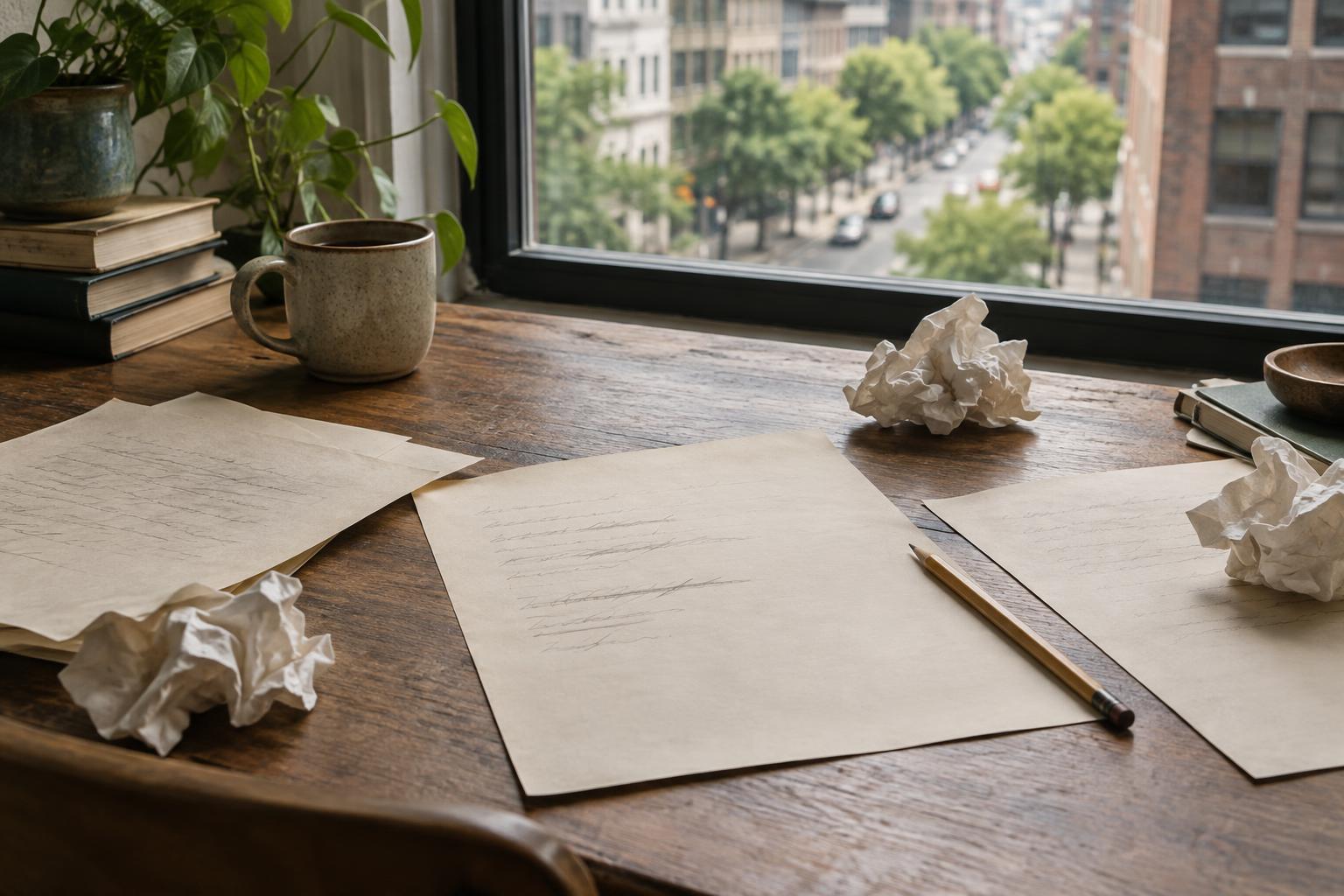
After a first draft, mark where the poem changes: where it leaves the immediate scene, asks a question, remembers something or sees the object differently. If no change occurs, try moving the most charged detail closer to the beginning and writing past it. If the draft takes too many turns, choose the one that feels most necessary and give it room. Read aloud to hear whether each image leads somewhere or merely adds decoration.
Finally, look at the ending. You need not explain what the object means. Returning to it after the poem has changed can be enough: the key may still be on the table, but the reader now understands why it has not been put away. An ordinary object makes a strong starting point because it can be noticed again. A draft becomes a poem when that second look is different from the first.