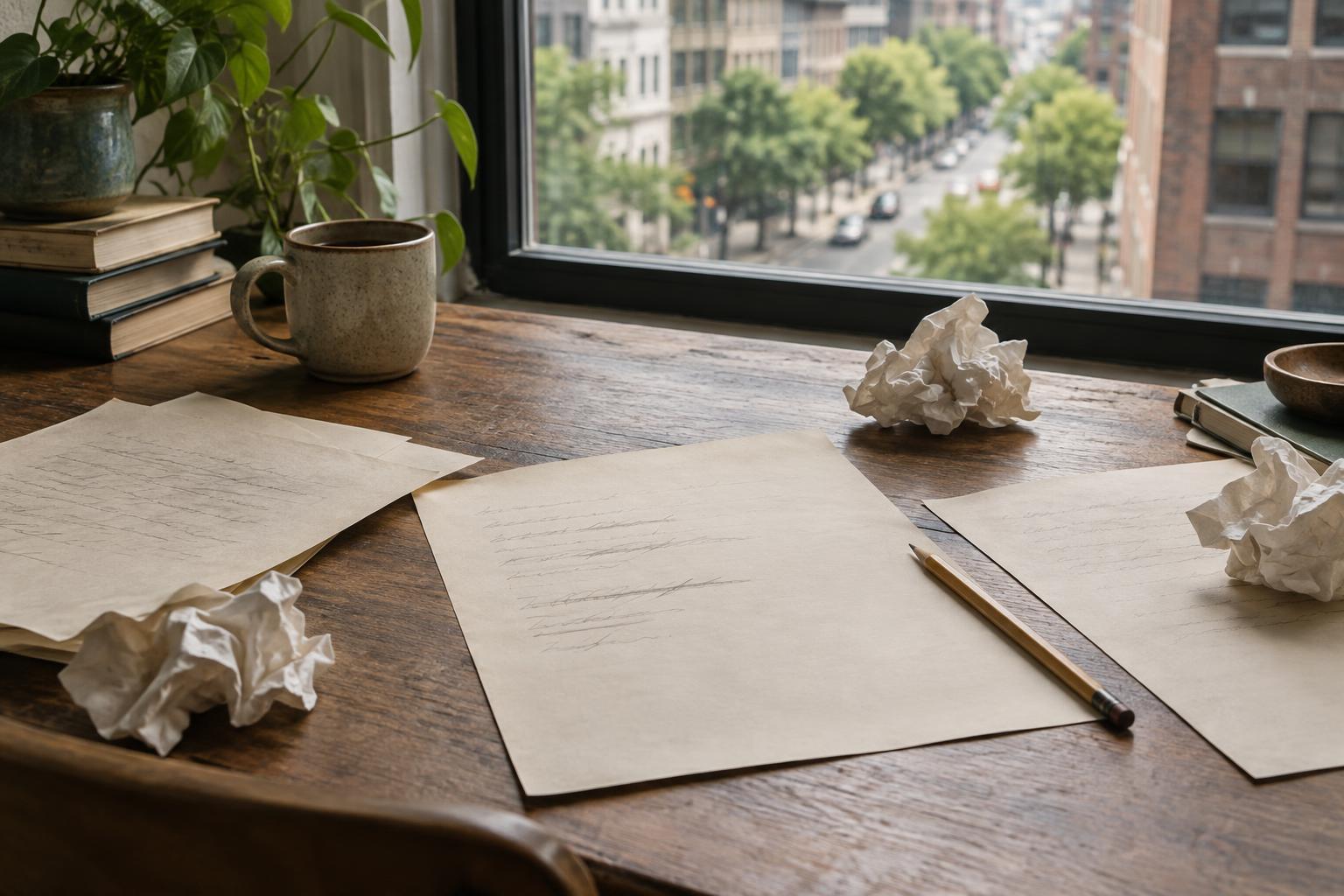
A poem changes when its setting changes
Poetry is often described as either spoken or written, but that division can hide more than it reveals. A poem may begin as a phrase said while walking, become lines in a notebook, and take on another shape when read to a room. The words may remain the same, yet a listener and a reader meet them under different conditions. One hears the poem unfold at a pace set by a voice; the other can pause, look back and decide when to move on.
Those conditions are not a ranking of one form above another. They are creative possibilities. Thinking about them helps explain why a line that looks striking on paper might be hard to follow aloud, or why a repeated phrase that electrifies a performance might feel different when printed. The useful question is not which version is the real poem, but what each encounter allows the poem to do.
What a voice can carry
In spoken-word poetry, breath, volume, tempo and silence become part of the composition. A pause can make an ordinary word feel uncertain; a quickening rhythm can convey excitement before the speaker names it. Pronunciation and accent may bring a word’s associations into focus. A performer can also shift emphasis between readings, letting the same sentence sound tender one night and defiant another.
The presence of an audience adds another layer. Listeners may respond visibly or audibly, and the performer can feel where an image lands or where a passage needs room. This does not mean every spoken-word poem calls for dramatic delivery. A quiet voice can hold attention, and restraint can be as deliberate as force. What matters is that the poem reaches people in time: they cannot usually stop the performance to examine a difficult line.
That forward motion can encourage clarity of movement, even when the language is complex. Refrains, recognizable turns and recurring sounds give listeners a way to find their place. A poem about a neighborhood, for instance, might return to the name of a street as its memories change. Each return can sound different because the listener has heard what came between.
What the page lets a reader see
On the page, a poet can work with the shape of language as well as its sound. A line break can leave one meaning suspended before the next line alters it. White space can separate voices, slow a thought or make an absence visible. Punctuation, capitalization and stanza length all offer cues, but the reader decides how long to stay with them.
Rereading is one of the page’s particular strengths. A reader can move between the opening and ending, notice an image that has changed meaning, or sit with a sentence whose grammar admits more than one interpretation. Dense connections need not announce themselves immediately. The poem can reward a second or third visit without losing its first impression.
Printed poems are not silent by nature. Readers may hear a rhythm inwardly or speak the lines to discover where the breath falls. Likewise, page design does not have to be elaborate to matter. A short, unbroken stanza can create pressure; a single isolated line can open space around a thought. The visual arrangement helps set the terms of attention, even when it barely calls attention to itself.
Writing with both encounters in mind
A useful way to revise a poem is to test it in both forms. Read it aloud without explaining it first. Where does the voice stumble? Where might someone listening lose the thread? Then set it aside and return to the printed version. Do the line breaks add meaning, or do they merely mark where a performer would pause? Neither test supplies an automatic correction; each reveals a choice.
If a poem is meant mainly for performance, try listening to a recording without watching the performer. It may show whether a crucial image can be understood on first hearing. If the poem is meant mainly for the page, try reading it aloud anyway. Awkwardness may be productive, but it is worth knowing whether it is intentional. Repetition can guide a listener; a break across two lines can invite a reader to hold two meanings at once.
Some poems will change substantially as they move between media. A performance might need a repeated phrase that a printed version can leave implied. A page version might use spacing to distinguish memories that a performer separates through changes in tone. Treating these as versions rather than compromises leaves room for discovery. Voice makes a poem an event shared in time; the page offers a place to return. Both can give language a life beyond its first telling.