Voice lives in the movement of a sentence
A poem can use ordinary words and still sound unmistakably its own. Part of that identity comes from syntax: the order in which a sentence offers its thoughts. “I remember the street before the rain” moves steadily toward its destination. “Before the rain, the street—I remember it” doubles back. The basic memory is similar, but the second version sounds as though the speaker must search for it.
Sentence length changes that movement, too. A long sentence can gather observations, qualify them, and carry a reader through a shifting thought. A short sentence can interrupt that flow or give a detail sudden weight. Neither is naturally more poetic. The useful question is what kind of attention the speaker seems to give the subject: patient, hurried, guarded, delighted, or unsure.
Punctuation sets the terms of the pause
A comma asks for a modest pause while keeping the sentence connected. A period closes one thought before another begins. A colon can create a sense of arrival or explanation; a dash can make a turn feel abrupt or provisional. These marks do not dictate exactly how every reader will speak a poem aloud, but they offer cues about how its ideas relate. Compare “I waited, you came back” with “I waited. You came back.” The second version gives each event its own space.
Punctuation can also reveal a speaker’s attitude toward what they say. Parentheses may make a thought feel private or secondary. A question mark leaves an assertion unsettled. Repeated commas might suggest a speaker adding details faster than they can sort them. Before adding a mark for emphasis, ask what it does to the relationship between the words around it. If removing it leaves the voice unchanged, the mark may not be doing much work.
Fragments and repetition give thought a shape
A complete sentence supplies a recognizable path through an idea. A fragment can withhold part of that path: “The keys on the table. The door still open.” Such phrases may sound like quick observations, items in a memory, or thoughts a speaker cannot yet connect. Fragments are most effective when their incompleteness has a purpose. If every sentence breaks in the same way, the effect can become predictable rather than expressive.
Repetition offers another way to build a voice. Beginning several sentences with “I thought” might suggest someone correcting an earlier understanding. Repeating “there was” could make the poem sound like an inventory of a place. Small changes within the pattern matter: a sentence that finally begins differently can register as a change in confidence or perspective. Try reading repeated structures aloud and notice whether they accumulate meaning or merely keep the same rhythm going.
Line breaks can agree with syntax or resist it
A line break and a sentence ending are not the same thing. When a line ends at a period, the visual and grammatical pauses reinforce each other. When a sentence continues onto the next line, the reader encounters a brief uncertainty about what comes next. Consider “I carried the map of home” as one line. Breaking after “map” lets that word stand alone for a moment before “of home” changes its scope.
That moment of suspense is useful, but it need not appear at every line ending. Breaks that consistently follow natural phrases can give a poem a measured, speaking quality. Breaks that divide closely connected words can make reading feel more tentative or strained. Neither approach guarantees a particular effect; context matters. Read the poem once following its punctuation and once pausing slightly at each line ending. Where those two rhythms differ, you may hear an important part of its voice.
Revise by listening for intention
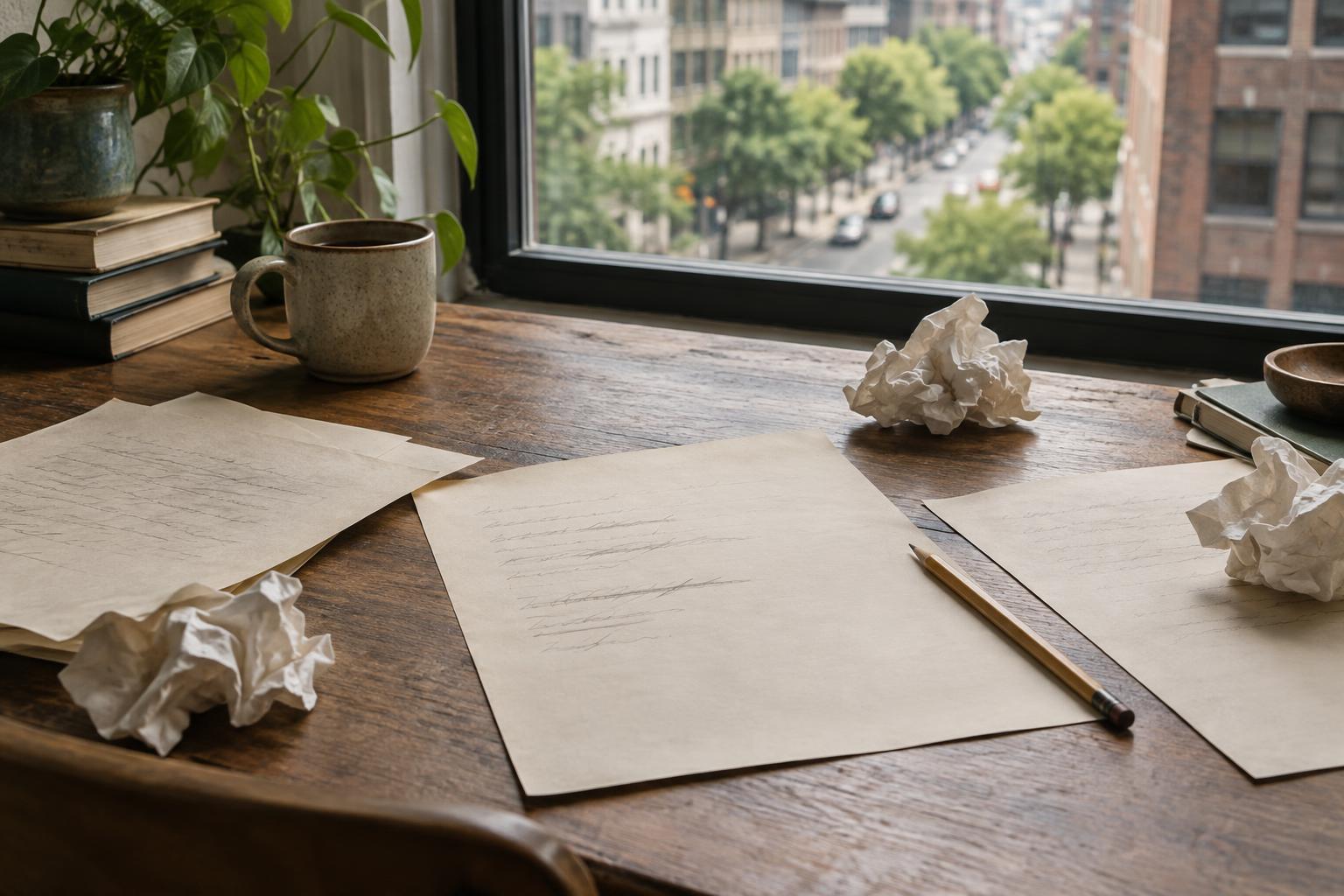
To revise a draft, take one short passage and make three versions. In the first, use complete sentences and conventional punctuation. In the second, shorten the sentences and allow a fragment or two. In the third, keep the words mostly intact but change where the sentences and lines end. Read each version aloud at an unhurried pace. Notice which one gives the speaker room to think and which one pushes the speaker toward a conclusion.
Then look beyond sound. Does a pause make a detail seem important when the poem treats it as incidental? Does a long sentence connect experiences that the speaker might prefer to keep separate? Does a fragment create a meaningful silence, or does it simply obscure who is doing what? Punctuation and syntax work best when they support the poem’s particular way of noticing the world. A clear sentence can hold uncertainty; a broken one can sound certain. The choice belongs to the voice you are trying to hear.