The difference is more than a pronoun
First person tells a story through an “I.” Third person limited uses “he,” “she,” or “they,” while staying within the experience of one viewpoint character at a time. Both can put a reader close to a character’s thoughts. Both can also leave important things unknown. The useful question is not which one is more intimate, but what kind of access the story needs.
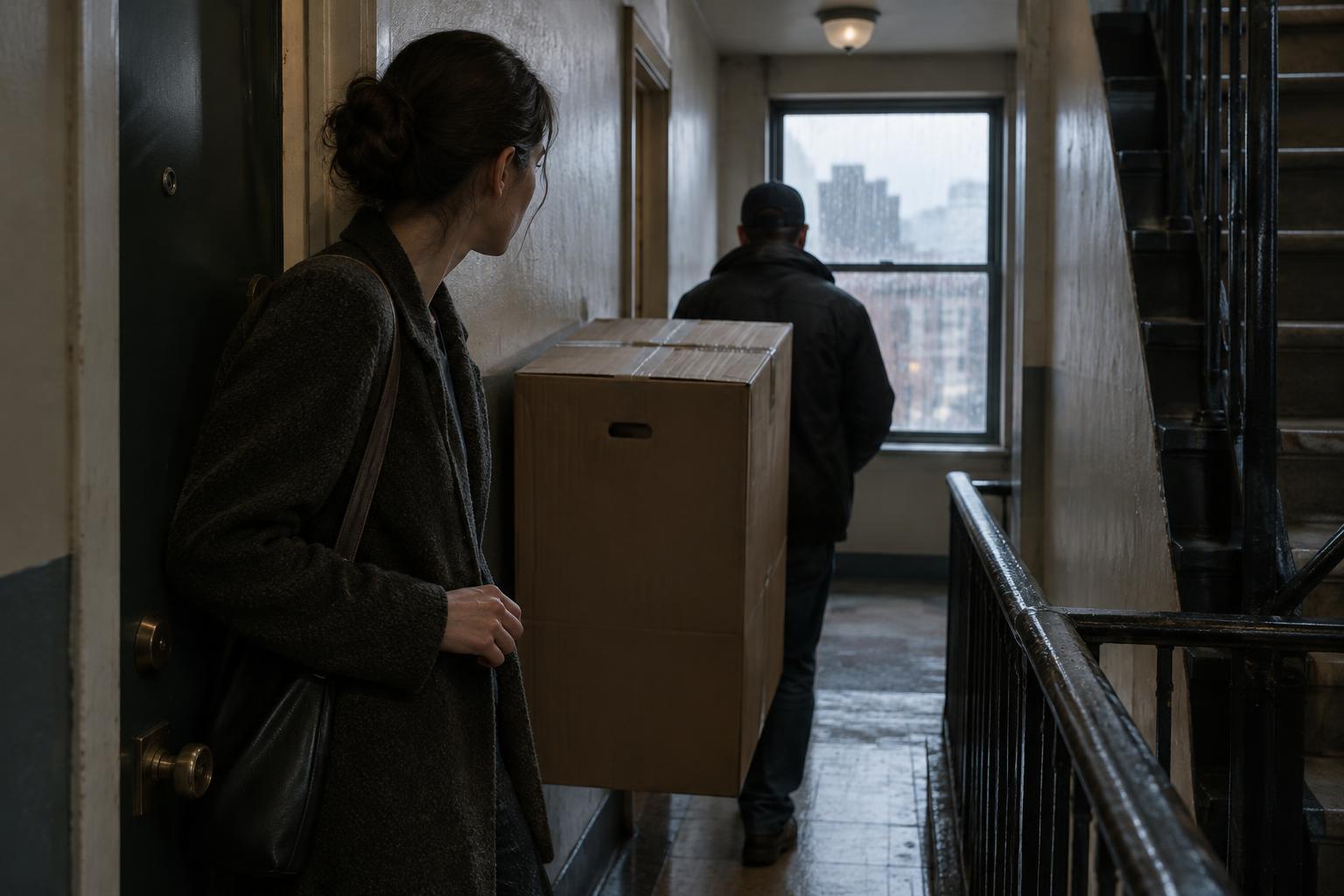
Imagine a character returning to an apartment building where they grew up. In first person, the account belongs to someone who may be explaining, remembering, defending, or revising their experience: “I used to think the stairwell smelled like rain.” In third person limited, the narration can still carry that memory, but it need not sound like an account the character is giving: “The stairwell smelled like rain to Mara, though she had never worked out why.” The event is similar; the relationship between reader, character, and telling is not.
First person gives the character control of the telling
A first-person narrator does more than witness events. They choose words, decide what deserves attention, and may reveal how they understand themselves. A character who calls a former neighbor “the woman downstairs” tells us something different from one who calls her “Auntie,” even if both refer to the same person. In a short story, such choices can establish a voice quickly and make the telling itself part of the action.
First person also creates a useful gap between experience and explanation. A narrator might describe a tense reunion while insisting that nothing is wrong. Readers can notice what the narrator overlooks or refuses to name. That does not make the narrator dishonest; memory, pride, embarrassment, and limited knowledge can all shape an account. If the story depends on the particular way someone tells it, first person may be the stronger choice.
Its strength can also be a constraint. The narrator must have a plausible way to know what they report. They cannot directly describe a private conversation across town unless they later hear about it or make clear that they are imagining it. That boundary can create suspense, but it can also make a story feel strained if too much essential action takes place beyond the narrator’s reach.
Third person limited can move closer or stand back
Third person limited is not a neutral camera. It can stay close enough to use a character’s perceptions and habitual language, or step back to describe what the character does without naming every thought. Consider: “Mara checked the lock again. Of course her brother had forgotten the key.” The second sentence may carry Mara’s judgment without announcing, “Mara thought.” This flexibility lets a writer vary the distance within a scene.
That small range of distance can be especially useful when a character cannot yet articulate what a place or encounter means to them. A story may show them taking the long route past an old storefront, then let the reader infer why. Third person limited can register a feeling without requiring the character to narrate it as a confession. It can also give physical movement and surroundings more room on the page, while still filtering those details through one person’s attention.
Limited means limited, however. If Mara is the viewpoint character, the narration should not quietly state what her brother privately intends. It can show his expression, his words, and Mara’s interpretation of them. A story can shift to another character’s limited viewpoint, but a clear scene break or other deliberate transition helps readers understand when their access has changed.
Choose the viewpoint that creates the right uncertainty
Every short story withholds something. First person often makes readers ask why this person is telling the story this way, or what they have not admitted to themselves. Third person limited may make readers ask what lies beyond the viewpoint character’s perception. Neither approach has a monopoly on trust, emotion, or surprise; the difference lies in where the uncertainty gathers.
When choosing, identify the story’s central pressure. Is it a character’s attempt to explain a decision they still question? First person could make that attempt audible. Is it the slow recognition that a familiar neighborhood no longer feels familiar? Third person limited might let changing details accumulate before the character finds words for the change. These are possibilities, not rules. The best viewpoint is the one that makes the story’s necessary information available while leaving its most productive questions open.
Test the choice on a single scene
Write a brief turning-point scene twice: once in first person and once in third person limited. Keep the action the same. As you revise, notice what changes without forcing it. Does the first-person version develop a distinctive rhythm or a reason for being told? Does the third-person version make room for gesture, setting, or an uncomfortable silence? If one version needs repeated explanations to deliver what the other conveys naturally, pay attention.
Then check the limits of access sentence by sentence. Ask how the viewpoint character knows each fact and whether a judgment belongs to that character or to the narration. You do not have to remove every ambiguity. In short fiction, uncertainty can invite readers to participate. What matters is that the uncertainty feels chosen, and that the viewpoint gives readers a compelling place from which to experience it.