A pause with a purpose
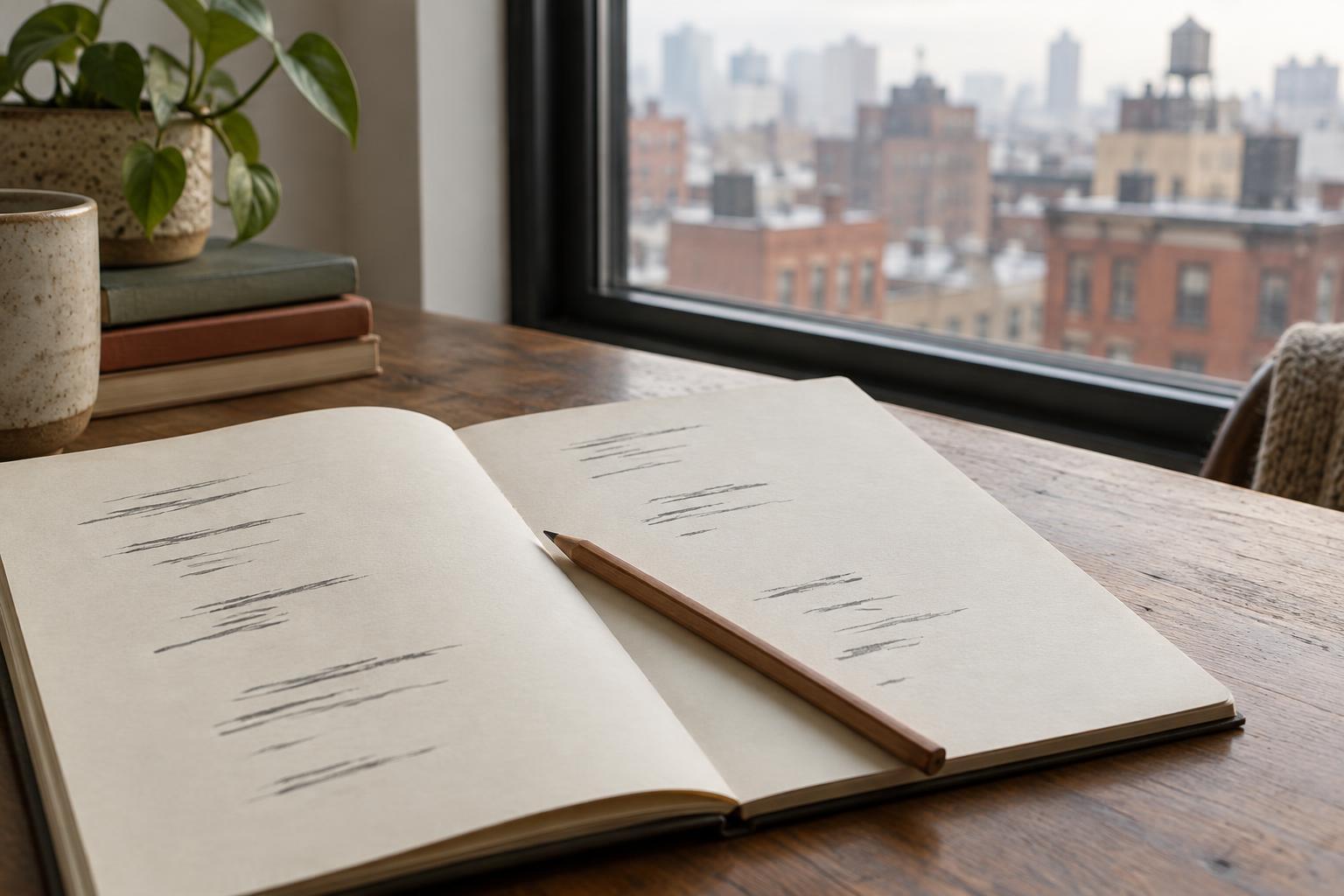
A stanza is a group of lines set apart from other lines by space. Where a line break asks a reader to move from one line to the next, a stanza break makes a larger visual division. It may encourage a longer pause, but it does not prescribe an exact length of silence. Readers still follow the poem’s punctuation, syntax, and rhythm. The blank space matters because it changes how the words on either side meet.
Consider a poem that describes an apartment window, then shifts to a childhood kitchen. A stanza break can make the shift visible before the second scene begins. Without one, the memories might seem to flow into each other. Neither choice is automatically stronger. The question is what relationship the poet wants the reader to experience: a quick association, a marked distance, or something between the two.
How space changes pace and emphasis
Stanza breaks can give a poem room to turn. A passage of description might end, leaving the next stanza to question what has just been seen. A speaker might move from “I” to “we,” from an observation to an admission, or from a busy street to a private memory. Placing the break at the point of change helps the reader register it without requiring a sentence that announces the transition.
Space can also give weight to a line. The last line of a stanza stays briefly in view before the reader crosses the gap; the first line after the gap arrives with fresh attention. If every strong statement gets its own stanza, though, the effect may become predictable. Try reserving prominent breaks for moments when a thought needs to settle, change direction, or be challenged by what follows.
Grouping images without explaining them
Stanzas can hold distinct images, scenes, or voices. One might follow a bus route through a neighborhood; another might recall the name someone once used for the same place. The gap lets both versions stand without forcing an explanation of how they fit together. It can signal an interval in time, a change in perspective, or simply the limits of what the speaker can say in one continuous movement.
A break does not have to separate unrelated material. Sometimes it draws attention to a link the poem never states outright. End one stanza with a locked door and begin the next with a person withholding an answer, and the reader may notice a connection between physical and conversational barriers. That connection remains open to interpretation. White space helps create the conditions for it; it does not guarantee that every reader will see the same thing.
Patterns create expectations
Regular stanzas give a poem a visible pattern. Equal-sized groups of lines may lend a sense of measure even when the language is conversational. Uneven stanzas can suit a poem whose attention expands and contracts: a long account followed by a brief correction, for example. Neither approach is inherently more natural. Each offers the reader a way to anticipate the poem’s movement.
Once a pattern is established, changing it can become meaningful. If most stanzas have four lines, a single-line stanza is likely to stand out. Before using that contrast, ask what the isolated line needs to do. Is it a hinge between scenes, a thought the speaker cannot elaborate, or merely a line that looks striking on the page? Visual emphasis works best when it serves the poem’s language rather than competing with it.
A simple revision test
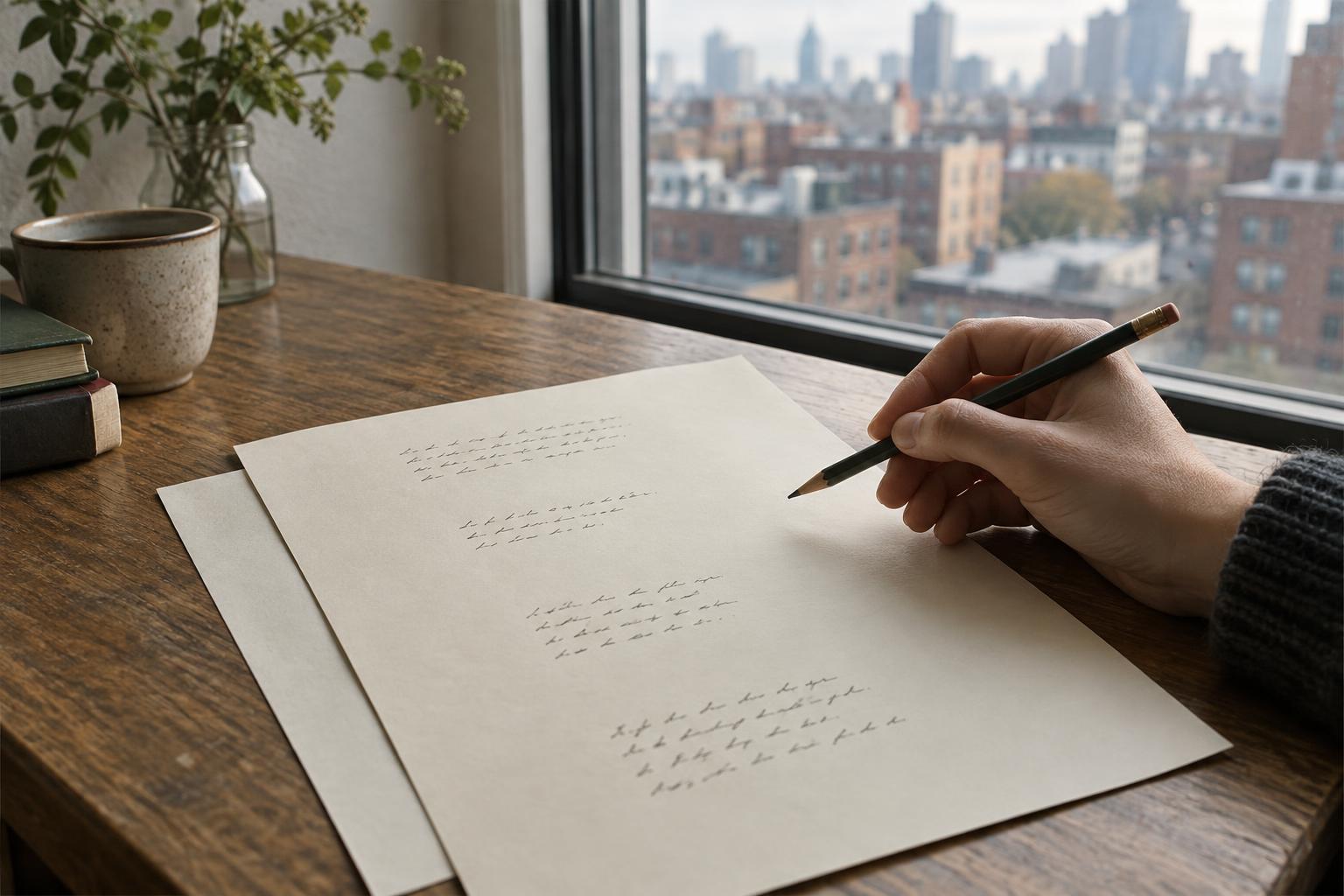
To revise a draft, first read it aloud while looking away from the page. Notice where the thought turns, where you hesitate, and where a new scene or voice enters. Then look at the existing stanzas. Do the spaces support those movements, or do they interrupt a sentence that wants to run on? Reading aloud is useful evidence, but it is not the only test: a break can create visual tension even when the voice carries smoothly across it.
Next, move or remove one stanza break and read both versions. Ask what the final line before the gap seems to mean on its own, and how the opening line after it responds. If combining two stanzas makes the passage clearer without losing anything, the break may not be needed. If adding space allows an image or contradiction to resonate, keep it and test the rest of the poem with the same care. Stanza breaks are choices about relationships between words, moments, and silences—not rules about how many lines belong together.